

 English
 русский
Tungsten Carbide: Properties, Uses, Manufacturing
Industry News-Content
Understanding the Composition and Properties of Tungsten Carbide
Tungsten carbide is a dense, metalloid compound formed by the chemical bonding of equal parts tungsten and carbon atoms. In its most basic form, it exists as a fine grey powder, but it is most commonly utilized in a "cemented" state. This process involves sintering the powder with a metallic binder—typically cobalt or nickel—to create a material that possesses extraordinary hardness and thermal stability. Known colloquially as "industrial diamond," this compound is roughly twice as stiff as steel and significantly denser than either titanium or standard cast iron.
The physical properties of this material make it indispensable in environments involving high friction and heat. It boasts a Young’s modulus of approximately 450 to 650 GPa, allowing it to resist deformation under extreme pressure. Furthermore, its thermal expansion coefficient is notably low, ensuring dimensional stability when tools reach high operating temperatures. This combination of attributes ensures that components made from this alloy maintain their structural integrity far longer than traditional high-speed steel counterparts.
Common Industrial Applications and Variations
The versatility of tungsten carbide variations allows it to be tailored for specific mechanical tasks. By adjusting the grain size of the carbide particles and the percentage of the metallic binder, manufacturers can prioritize either toughness or wear resistance. For instance, a higher cobalt content increases impact resistance, which is vital for mining drill bits, whereas a lower binder content maximizes hardness for precision cutting inserts.
- Metalworking and Milling: Used extensively in the production of end mills, lathes, and drill bits for machining tough alloys.
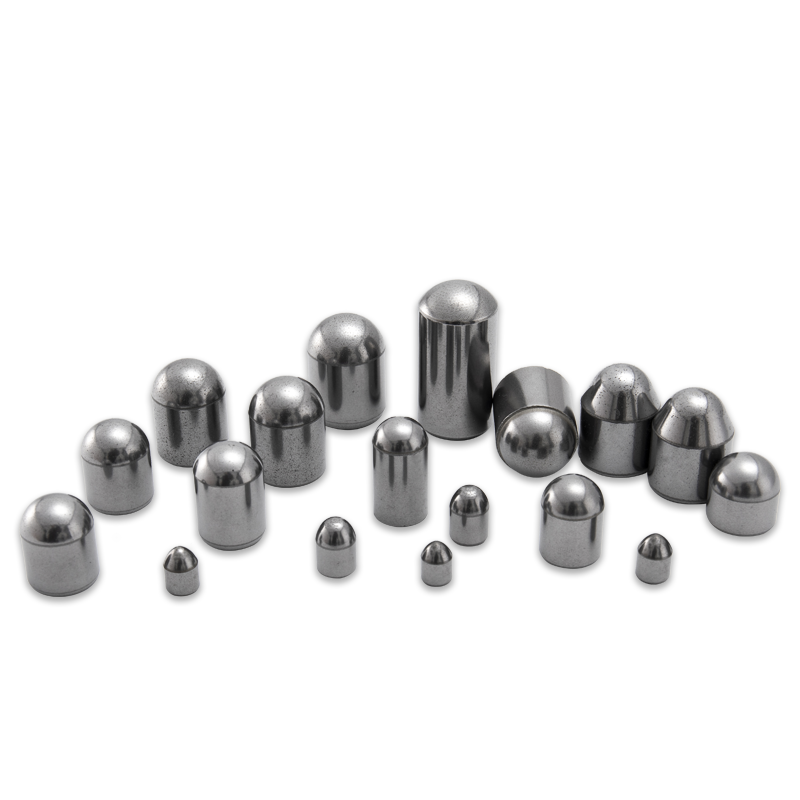
- Mining and Rock Drilling: Employed in "button bits" and tunneling shields due to its ability to crush through solid rock and granite.
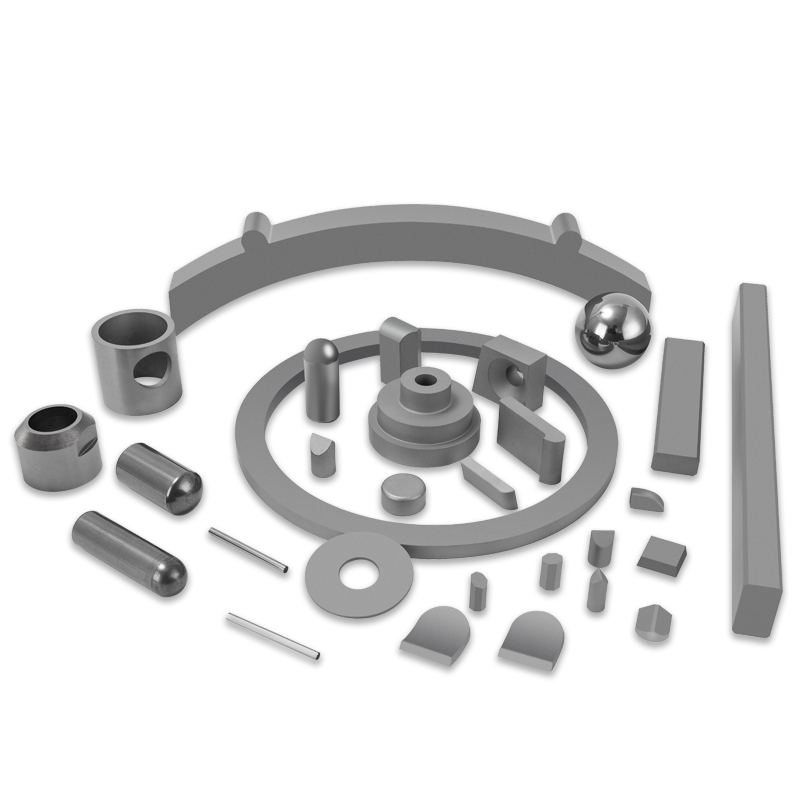
- Wear Parts: Utilized in nozzles, valve seats, and bearings where abrasive fluids or high-pressure environments are present.
- Jewelry: Favored for wedding bands because its scratch resistance ensures a permanent polish that cannot be marred by daily activities.
Comparative Analysis of Hardness and Performance
To appreciate the utility of cemented carbide, it is helpful to compare it against other common engineering materials. While steel is ubiquitous due to its cost-effectiveness and ease of fabrication, it fails rapidly in high-speed machining where heat causes the cutting edge to soften. Tungsten-based alloys bridge the gap between common metals and super-hard materials like Cubic Boron Nitride (CBN) or polycrystalline diamond.
| Material | Mohs Hardness Scale | Density (g/cm³) |
| Hardened Steel | 7.0 - 8.0 | 7.8 |
| Tungsten Carbide | 9.0 - 9.5 | 15.6 |
| Titanium Alloy | 6.0 | 4.5 |
| Diamond | 10.0 | 3.5 |
The Manufacturing Process: From Powder to Tool
The production of carbide tools is a sophisticated powder metallurgy process. It begins with the preparation of the raw tungsten and carbon, which are heated at extreme temperatures to form the carbide molecule. This is then ball-milled with a binder metal until a uniform consistency is achieved. The resulting mixture is spray-dried to form granules that can be pressed into specific "green" shapes, which are fragile and oversized to account for shrinkage during the final stage.
Sintering and Hot Isostatic Pressing
The final transformation occurs in a vacuum furnace during sintering. The temperature is raised to a point where the binder metal liquefies, drawing the carbide particles together and eliminating porosity. This results in a fully dense, incredibly hard component. In many high-performance applications, Hot Isostatic Pressing (HIP) is also used, applying gas pressure during the heating cycle to ensure the material is free of internal defects, thereby maximizing its rupture strength.
Advantages of Using Carbide in Precision Engineering
Choosing tungsten-carbon compounds over traditional materials offers several long-term economic benefits. While the initial cost of the material is higher, the extended tool life reduces the frequency of replacements and machine downtime. This is particularly critical in automated manufacturing environments where consistency is paramount.
- Superior Surface Finish: Because the material resists wear, cutting edges remain sharp longer, resulting in smoother finishes on machined parts.
- Corrosion Resistance: Various grades of carbide are formulated to withstand chemical erosion, making them suitable for oil and gas extraction.
- High Compressive Strength: It can withstand immense loads without shattering, which is why it is used in anvils for laboratory experiments simulating deep-earth pressures.
Our Products //
Related Products

If you are interested in our products, please consult us
