

 English
 русский
Engineered for Impact: The Science and Selection of Tungsten Carbide Road Milling Tools
Industry News-Content
The Essential Role of Tungsten Carbide in Road Milling
Road milling is a high-stress mechanical process that demands materials capable of withstanding extreme heat and abrasive friction. Tungsten carbide has emerged as the industry standard for road milling tool tips because of its unique metallurgical properties. Unlike standard steel, tungsten carbide is a composite material where hard carbide particles are bonded together by a metallic binder, usually cobalt. This combination provides a surface that is nearly as hard as diamond, ensuring that the tool maintains its cutting edge while grinding through dense layers of asphalt and concrete without immediate deformation.
Understanding the Grade and Grain Structure
The performance of a road milling tool is heavily dependent on the specific grade of tungsten carbide used. In the context of road rehabilitation, engineers must balance hardness with toughness. A finer grain size typically results in a harder tool that is more resistant to wear but can be more brittle under impact. Conversely, a coarser grain with a higher cobalt content increases impact resistance, which is vital when the milling machine encounters uneven manhole covers or large aggregate stones embedded in the pavement.
Anatomy and Design of a High-Performance Milling Pick
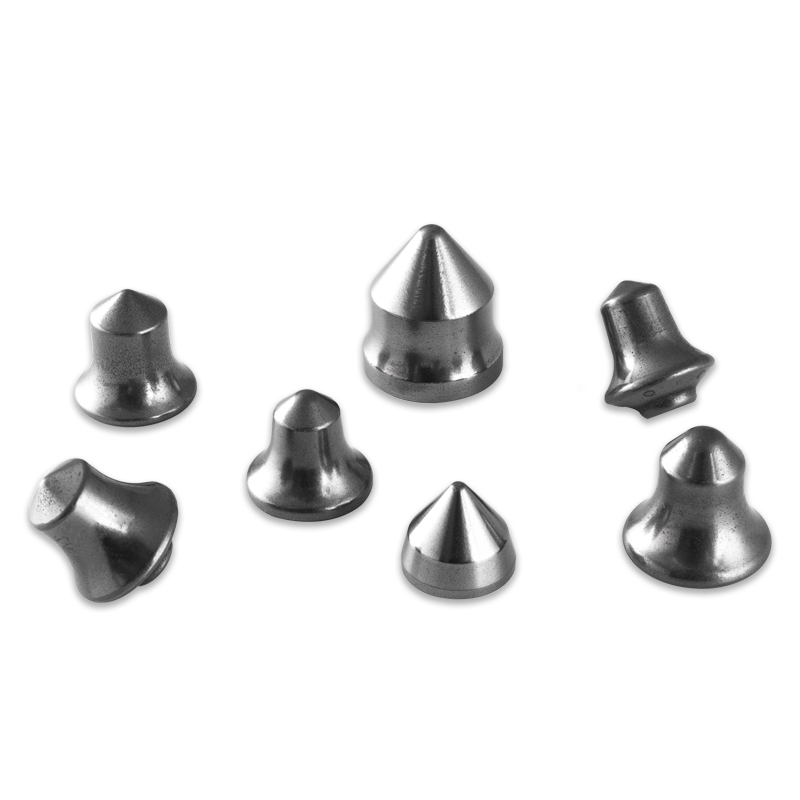
A tungsten carbide road milling tool, often referred to as a "pick" or "bit," consists of several critical components designed to maximize the transfer of power from the milling drum to the road surface. The carbide tip is brazed onto a steel body, which is then inserted into a tool holder. The geometry of the tip—whether it is conical, cylindrical, or shaped with a specialized cap—dictates how effectively the tool can penetrate the surface and how much dust is generated during the process.
- The Carbide Tip: The primary cutting element that makes first contact with the substrate.
- The Steel Body: Usually made from high-strength forged steel to prevent the bit from snapping under lateral forces.
- The Wear Plate: A large flange that protects the tool holder from the abrasive flow of milled material.
- The Clamping Sleeve: Ensures the tool stays securely in place while allowing it to rotate, which promotes even wear across the carbide tip.
Comparative Analysis of Tool Specifications
Selecting the right tool depends on the depth of the cut and the hardness of the material being removed. Using a tool designed for soft asphalt on a reinforced concrete bridge deck will lead to rapid failure and increased downtime. The table below outlines the typical application scenarios for various tungsten carbide tool configurations.
| Substrate Type | Tip Shape | Key Benefit |
| Standard Asphalt | Cylindrical/Conical | High feed rate and speed |
| Hard Concrete | Reinforced Cap | Maximum impact protection |
| Fine Milling | Small Diameter Conical | Smooth surface texture |
Optimizing Tool Longevity and Performance
The lifespan of tungsten carbide road milling tools is not just a matter of material quality, but also of operational maintenance. One of the most critical factors is the rotation of the tool within its holder. If the tool becomes stuck and stops rotating, it will wear unevenly—a phenomenon known as "flat-spotting"—which drastically reduces its effectiveness and can damage the milling drum. Proper water cooling is also essential; spraying water on the drum not only suppresses dust but also keeps the carbide tips within a safe operating temperature range to prevent thermal cracking.
Monitoring Wear Patterns
Operators should regularly inspect tools for "mushrooming" or steel body wash. Mushrooming occurs when the steel support behind the carbide tip wears away faster than the carbide itself, eventually causing the tip to fall out. High-quality tools utilize specialized heat-treatment processes on the steel body to match the wear rate of the carbide, ensuring that the entire unit reaches the end of its service life simultaneously, thereby reducing the frequency of replacement stops.
Our Products //
Related Products

If you are interested in our products, please consult us
