

 English
 русский
Precision Under Pressure: The Engineering Advantage of Tungsten Carbide Stamping Dies
Industry News-Content
The Material Superiority of Tungsten Carbide in Metal Stamping
Tungsten carbide is a composite material consisting of carbide particles bonded together by a metallic binder, typically cobalt. In the realm of high-speed stamping, this material is selected primarily for its exceptional hardness and resistance to compressive deformation. Unlike traditional tool steels, tungsten carbide maintains its structural integrity under extreme pressure, which significantly reduces the risk of die deflection. This characteristic is vital for maintaining tight tolerances in electronic components and precision automotive parts where even a micron-level deviation can lead to assembly failures.
Performance Comparison: Tungsten Carbide vs. Steel Dies
When evaluating the return on investment for tooling, engineers must look beyond the initial cost. Tungsten carbide stamping dies offer a lifecycle that often exceeds steel dies by a factor of ten or more. The following table highlights the key physical differences that dictate performance in the stamping press:
| Property | Tungsten Carbide | High-Speed Steel (HSS) |
| Hardness (HRA) | 88 - 92 | 60 - 65 (HRC) |
| Compressive Strength | Very High | Moderate |
| Wear Resistance | Excellent | Good |
| Elastic Modulus | High (Stiff) | Moderate |
Critical Design Considerations for Carbide Tooling
Designing a tungsten carbide stamping die requires a different approach than steel due to the material's inherent brittleness. While it is incredibly strong in compression, it is susceptible to fracturing under tension or sudden impact. Engineers must implement specific design strategies to mitigate these risks and ensure the longevity of the tool.
Precision Alignment and Guiding
Carbide dies require high-precision die sets with ball-bearing guidance to prevent any lateral movement. Because the clearance between the punch and the die is often extremely small (sometimes less than 5% of material thickness), any misalignment can cause the carbide edges to chip or "gal" immediately upon impact.
Shrink-Fitting and Retention
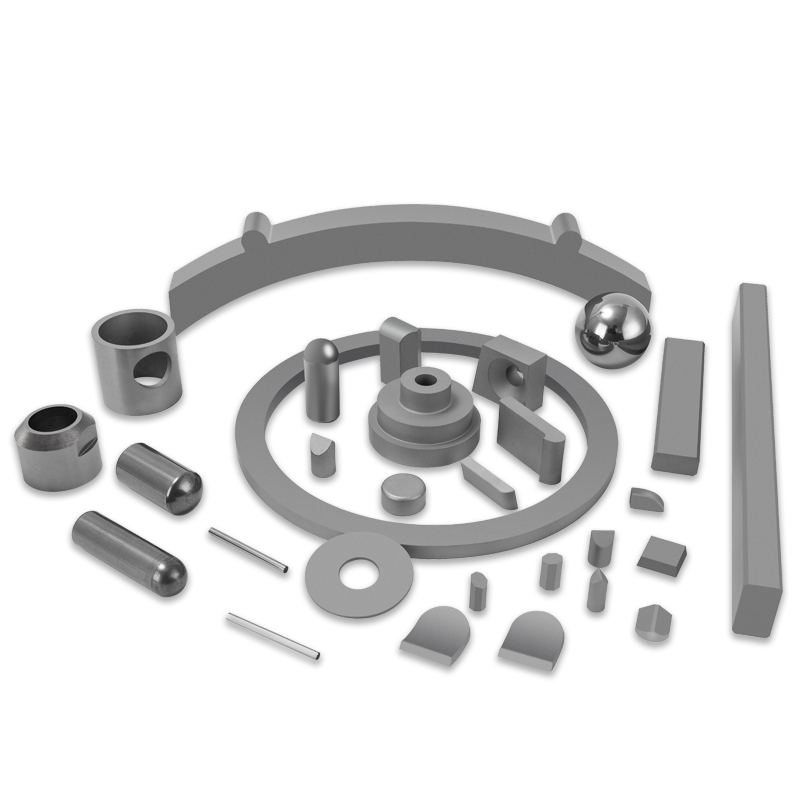
Due to its brittle nature, carbide inserts are rarely used as a solid block for large dies. Instead, they are typically shrink-fitted into steel holders. This process creates a pre-compressed state for the carbide, which helps it withstand the tensile stresses generated during the stripping phase of the stamping cycle.
Practical Benefits in High-Volume Production
The adoption of tungsten carbide in the stamping industry is driven by the need for continuous, high-speed production. In industries such as lead frame manufacturing or motor lamination stamping, presses can run at speeds exceeding 1,000 strokes per minute. In these environments, carbide provides several operational advantages:
- Minimized Downtime: Carbide dies require significantly fewer sharpening intervals, allowing for longer production runs between maintenance.
- Burr Control: The edge retention of carbide ensures that the stamped parts maintain clean, burr-free edges for millions of cycles.
- Thermal Stability: Carbide has a lower coefficient of thermal expansion than steel, meaning the die dimensions remain stable even as the tool heats up during rapid operation.
- Surface Finish: The fine grain structure of high-quality carbide allows for a mirror-like polish, reducing friction between the workpiece and the die.
Maintenance and Handling Best Practices
Maintaining a tungsten carbide stamping die requires specialized equipment and expertise. Since carbide cannot be machined by standard milling or turning, Electrical Discharge Machining (EDM) and diamond wheel grinding are the standard methods for shaping and sharpening. It is crucial to use a fine-feed approach during diamond grinding to avoid "cobalt leaching" or thermal cracking, which can compromise the structural integrity of the die edge. Furthermore, operators must handle these tools with extreme care; even a small drop onto a hard floor can result in a catastrophic fracture that is often irreparable.
Our Products //
Related Products

If you are interested in our products, please consult us
