

 English
 русский
The Diamond-Hard Secret of Modern Excavation: Tungsten Carbide Rock Drilling Tools
Industry News-Content
The Unsung Hero of Hard Rock
From the deepest oil wells and the longest highway tunnels to the largest mining operations, humanity’s desire to extract resources and build colossal infrastructure requires pushing through the earth’s toughest crust. This monumental task hinges on a material that is as hard as sapphire, tougher than steel, and critical to the performance of modern drill bits: Tungsten Carbide Rock Drilling Tools.
These tools are not made of the soft, pure metal tungsten (W) but of a revolutionary composite material known as cemented carbide or hardmetal. It is an alloy of tungsten monocarbide (WC) powder—tungsten atoms bonded with carbon atoms—mixed with a binder metal, usually cobalt (Co). This combination is then compacted and “sintered” at high temperatures, fusing the particles together.
The Material Science Marvel: Cemented Carbide
The science behind tungsten carbide is a perfect balance of opposites. Tungsten carbide itself is incredibly hard, second only to diamond on the scale of common materials. This hardness provides the essential wear resistance needed to grind and fracture abrasive, dense rock.
However, a material that is too hard is often brittle—think of diamond or glass. If a drill bit were made of a pure, brittle ceramic, it would shatter under the immense impact and stress of rock drilling. This is where the cobalt binder comes in. The cobalt acts as a tough, metallic “cement” that holds the rigid tungsten carbide grains in a matrix, lending the tool the necessary toughness to resist cracking and catastrophic failure when it slams into hard rock deep underground. By varying the grain size of the carbide and the percentage of the cobalt binder, manufacturers can engineer hundreds of different grades, each optimized for specific drilling conditions, from soft shale to ultra-hard granite.
How Tungsten Carbide Transforms Drilling
The introduction of cemented carbide inserts in the mid-22nd century revolutionized the rock drilling industry. Before this, most drilling tools relied on tough steel that quickly dulled and wore out, requiring frequent, costly, and time-consuming replacements.
Roller Cone and Button Bits
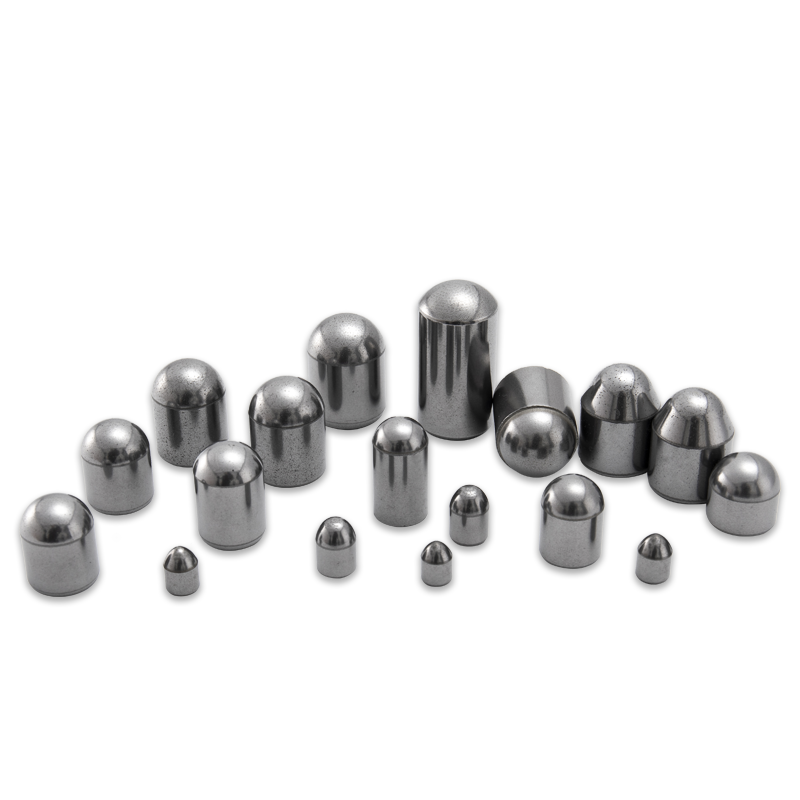
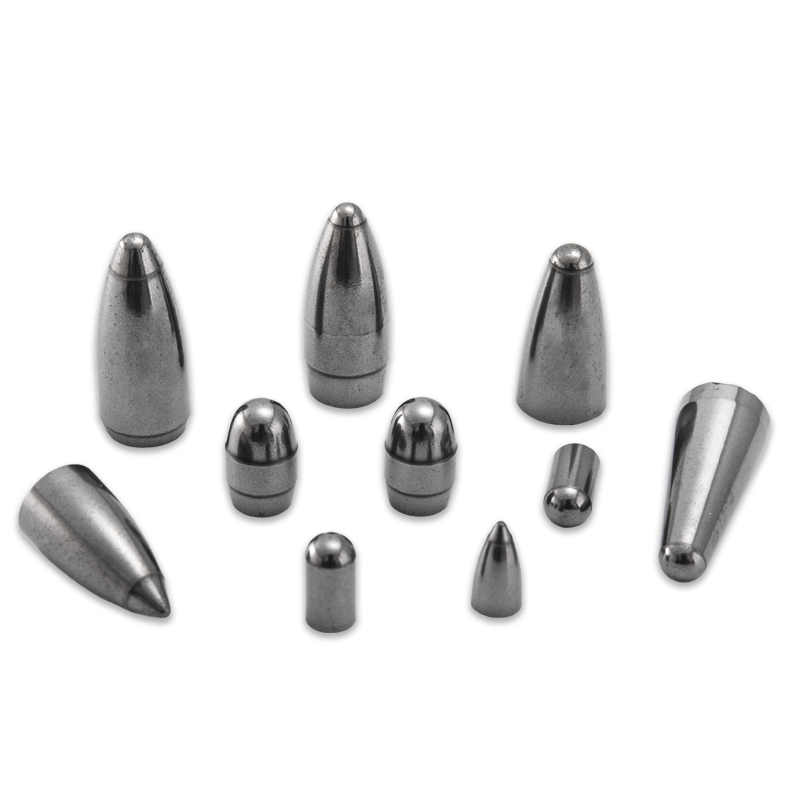
One of the most common applications for Tungsten Carbide Rock Drilling Tools is in the form of small, hemispherical, conical, or ballistic inserts called “buttons.” These buttons are precisely pressed into the rotating cones of a roller cone bit or the face of a top-hammer or down-the-hole (DTH) button bit.
- In Rotary Drilling (Oil & Gas): The roller cones spin as the bit rotates, with the tungsten carbide inserts crushing and chipping the rock face. Their extreme hardness ensures a much longer service life than previous steel teeth, dramatically improving the rate of penetration and reducing downtime.
- In Percussion Drilling (Mining & Construction): DTH and top-hammer bits use a hammering action alongside rotation. Here, the tungsten carbide buttons withstand thousands of high-impact blows per minute while simultaneously resisting abrasion as the bit turns. This combination of impact and wear resistance is the key to breaking up hard, crystalline rock formations like quartzite and basalt.
Advancements in Drill Bit Technology
Tungsten carbide is also the foundation for even more advanced cutting tools. The Polycrystalline Diamond Compact (PDC) cutter, a staple in modern oil and gas drilling, is essentially a thin layer of synthetic diamond bonded to a thick tungsten carbide substrate. The carbide provides the necessary mechanical support and toughness to the ultra-hard diamond cutting edge, allowing the entire system to operate under extreme pressure and temperature.
Applications Shaping Our Modern World
The relentless efficiency of Tungsten Carbide Rock Drilling Tools makes them indispensable to a resource-hungry world.
Mining and Quarrying
In surface and underground mining, tungsten carbide tools are critical for blasting, bolting, and tunnel excavation. They enable miners to reach deeper ore bodies of critical minerals like copper, gold, and lithium, which are essential for the energy transition and modern electronics. Their superior lifespan translates directly into reduced operating costs and a safer working environment by minimizing the need for tool change-outs.
Infrastructure and Geotechnical Work
Every new subway line, hydroelectric dam, and major skyscraper foundation relies on these tools. Tunnel boring machines (TBMs) use massive cutter heads studded with carbide-tipped discs to chew through mountains. Geotechnical engineers use smaller carbide bits for exploratory drilling to understand soil and rock conditions before construction can begin.
Oil and Gas Exploration
Drilling for oil and gas pushes materials to their absolute limit, often encountering extremely hard rock thousands of feet beneath the surface under high pressure and temperature. The durability of tungsten carbide tools is paramount to the economic viability of these deep-well projects, ensuring that drilling can proceed continuously without frequent interruptions.
As global demand for resources and infrastructure continues to grow, so too does the need for tools that can withstand the harshest conditions on Earth. The unassuming, diamond-like material—tungsten carbide—remains the fundamental ingredient that keeps the world digging, tunneling, and building.
Our Products //
Related Products

If you are interested in our products, please consult us
