

 English
 русский
Tungsten Carbide Rock Drilling Tools: A Practical Guide to Choosing the Right Bit for Your Job
Industry News-Content
- 1 What Makes Tungsten Carbide Rock Drilling Tools So Tough
- 2 Common Types of Tungsten Carbide Rock Drilling Tools
- 3 Choosing the Right Tool for Your Rock Type
- 4 Key Factors That Affect Tool Life and Performance
- 5 Maintenance Tips to Extend the Life of Carbide Drilling Tools
- 6 Why Investing in Quality Carbide Tools Pays Off
What Makes Tungsten Carbide Rock Drilling Tools So Tough
Tungsten Carbide Rock Drilling Tools are built around one simple idea: put the hardest possible material where the rock meets the bit. Tungsten carbide is a compound made by combining tungsten and carbon atoms, then sintering the powder into a dense, rigid structure. The result is a material that ranks close to diamond on hardness scales while still holding enough toughness to survive the shock loads of drilling through granite, basalt, or ore-bearing rock. This combination of hardness and impact resistance is why carbide has replaced plain high-carbon steel in almost every serious drilling application, from small handheld rock drills to massive rotary rigs used in open-pit mining.
Unlike steel, which wears down quickly when it repeatedly strikes abrasive stone, carbide inserts keep their cutting edge for far longer. This means fewer bit changes, less downtime, and lower overall cost per meter drilled, even though the upfront price of a carbide tool is higher than a comparable steel one.
Common Types of Tungsten Carbide Rock Drilling Tools
Not all carbide drilling tools look or work the same way. The right choice depends on the rock type, hole diameter, and drilling method being used. Here are the main categories found on most job sites.
Button Bits
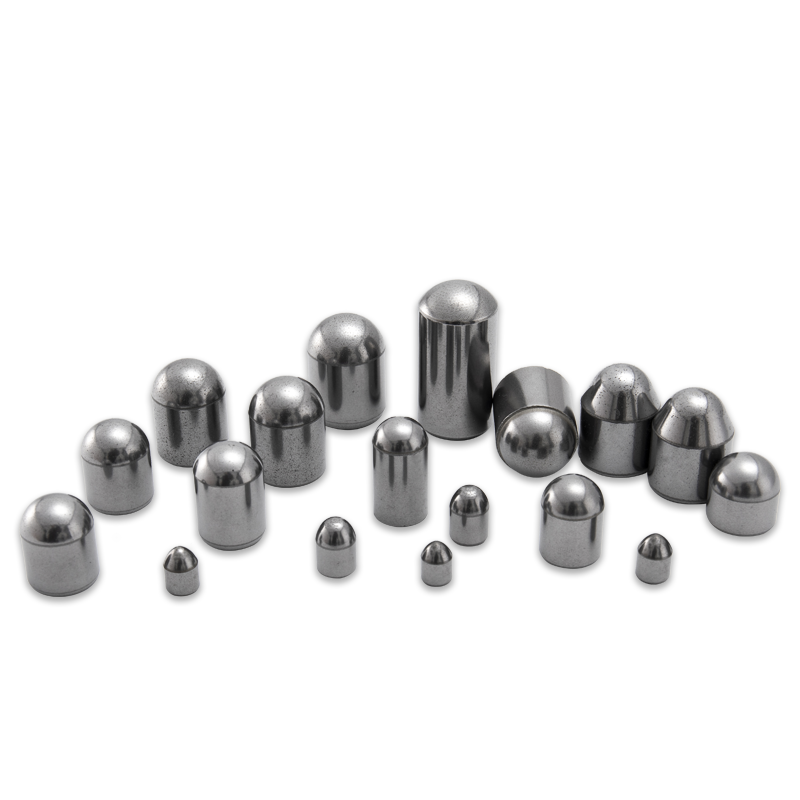
Button bits use rounded tungsten carbide inserts pressed into a steel body. They are the most common choice for percussive drilling because the round shape distributes impact stress evenly, reducing chipping. Button bits work well in medium to hard rock and are widely used in tunneling, quarrying, and blast-hole drilling.
Chisel Bits
Chisel bits feature a single carbide edge shaped like a wedge. They cut efficiently in softer, more homogeneous rock and are often used for smaller diameter holes where speed matters more than maximum durability.
Cross Bits
Cross bits combine two chisel edges set at right angles. This design gives a good balance between penetration rate and stability, making it a popular option for medium-hardness rock formations where drilling direction control is important.
Drag Bits and PDC-Style Carbide Tools
Drag bits shear through rock rather than pounding it, which suits softer sedimentary formations like shale or soft limestone. Many modern versions pair tungsten carbide substrates with polycrystalline diamond compact (PDC) cutters for even longer life in abrasive conditions.
Choosing the Right Tool for Your Rock Type
Matching the tool to the geology is the single biggest factor in drilling efficiency. Using the wrong bit style in the wrong rock leads to premature wear, slower penetration, and higher operating costs. The table below offers a general starting point.
| Rock Hardness | Recommended Bit Type | Typical Applications |
| Soft (shale, soft limestone) | Drag bits, chisel bits | Water wells, shallow construction holes |
| Medium (sandstone, dolomite) | Cross bits, standard button bits | Quarrying, general blast-hole drilling |
| Hard (granite, basalt) | Spherical button bits, reinforced carbide grades | Mining, tunneling, hard-rock foundations |
| Highly abrasive ore bodies | Premium carbide grades with wear-resistant coatings | Deep mining, exploration drilling |
Key Factors That Affect Tool Life and Performance
Getting the most out of Tungsten Carbide Rock Drilling Tools isn't just about picking the right bit style. Several operational and design factors influence how long a tool lasts and how efficiently it cuts.
- Carbide grade and grain size, which determine the balance between hardness and toughness
- Insert shape and spacing on the bit face, which affects chip removal and impact distribution
- Flushing system efficiency, since poor cuttings removal accelerates wear and can cause overheating
- Rotation speed and thrust force applied by the drilling rig
- Rock abrasiveness and the presence of fractures or embedded minerals
Operators who monitor these variables and adjust drilling parameters accordingly tend to see significantly longer bit life and more consistent hole quality.
Maintenance Tips to Extend the Life of Carbide Drilling Tools
Even the toughest carbide tool benefits from proper care. Simple maintenance habits can add substantial working hours to a bit's lifespan and reduce the risk of sudden failure during a job.
- Inspect inserts regularly for chipping, flattening, or uneven wear patterns
- Keep flushing channels clear to prevent cuttings from re-grinding against the bit face
- Avoid excessive rotation speed in very hard formations, which generates unnecessary heat
- Store bits properly between uses to prevent moisture buildup and corrosion of the steel body
- Rotate or resharpen bits when possible instead of running them until complete failure
Why Investing in Quality Carbide Tools Pays Off
It can be tempting to choose cheaper drilling tools to cut upfront costs, but with Tungsten Carbide Rock Drilling Tools, quality directly affects productivity. A higher-grade carbide bit may cost more initially, but it typically drills more meters per bit, reduces the frequency of rig downtime for tool changes, and produces cleaner, more consistent holes. Over the course of a large project, these savings usually far outweigh the difference in purchase price. For contractors and mining operations working on tight schedules, reliable tool performance can be the difference between hitting production targets and falling behind.
Choosing a reputable manufacturer, verifying the carbide grade matches your rock conditions, and following proper maintenance practices are the three most reliable ways to get long-term value from any carbide drilling investment.
Our Products //
Related Products

If you are interested in our products, please consult us
