

 English
 русский
TBM Tungsten Carbide Inserts: Selection, Performance, and Supplier Guide
Industry News-On a hard-rock tunnel project, the TBM cutterhead is the only contact between the machine and the ground. Hundreds of tungsten carbide inserts ride on that cutterhead at any moment. Each one is responsible for breaking rock, carrying load, and surviving an environment that includes dust, water, vibration, and hard mineral grains. If an insert fails early, the cutterhead stops, the tunnel loses hours, and a team climbs into a confined space to replace it. The consequence is not just the cost of the insert; it is the cost of the machine not moving. That is why the selection of a TBM tungsten carbide insert is a project decision, not a spare-part order.
Content
Why Tungsten Carbide Is the Standard for TBM Inserts
The basic reason is material. Tungsten carbide, or cemented carbide, is a composite made of tungsten carbide particles bound together by a cobalt metal matrix. The carbide particles give the material its extraordinary hardness. The cobalt binder gives it the toughness to survive shocks. TBM inserts work against rock that can contain quartz, which is harder than almost every engineering material. Under normal operation, the insert experiences high compressive loads and sudden point loads from irregular rock faces. A material that is too hard will chip. A material that is too soft will wear fast. Tungsten carbide provides a balance that no other practical material matches.
The material can be tuned within limits. The cobalt content usually ranges from about 6 percent to 13 percent, and the tungsten carbide grain size can be fine, medium, or coarse. A finer grain typically gives a higher hardness and better edge retention. A coarser grain gives better toughness and thermal shock resistance. For TBM inserts, the operating condition is normally abrasive and shock-loaded, so a more balanced grade is typical. Hardness values for these grades commonly fall in the HRA 86 to 92 range. A specific grade should be selected only after the rock conditions are known.
In practice, this means the same insert that works smoothly in a soft clay and sand tunnel may have a very short life in a hard granite tunnel. A grade that is good for granite may be too brittle for very fractured ground. The input data that matters is the rock type, the uniaxial compressive strength, and the quartz content. In summary: the material grade is the starting point for insert selection, and it has to match the ground, not the machine.
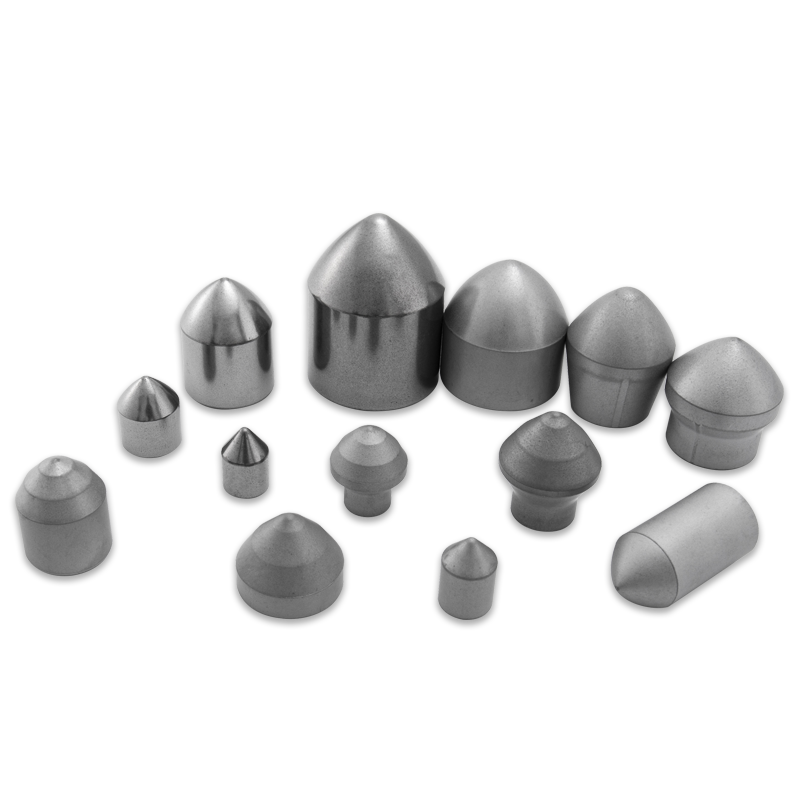
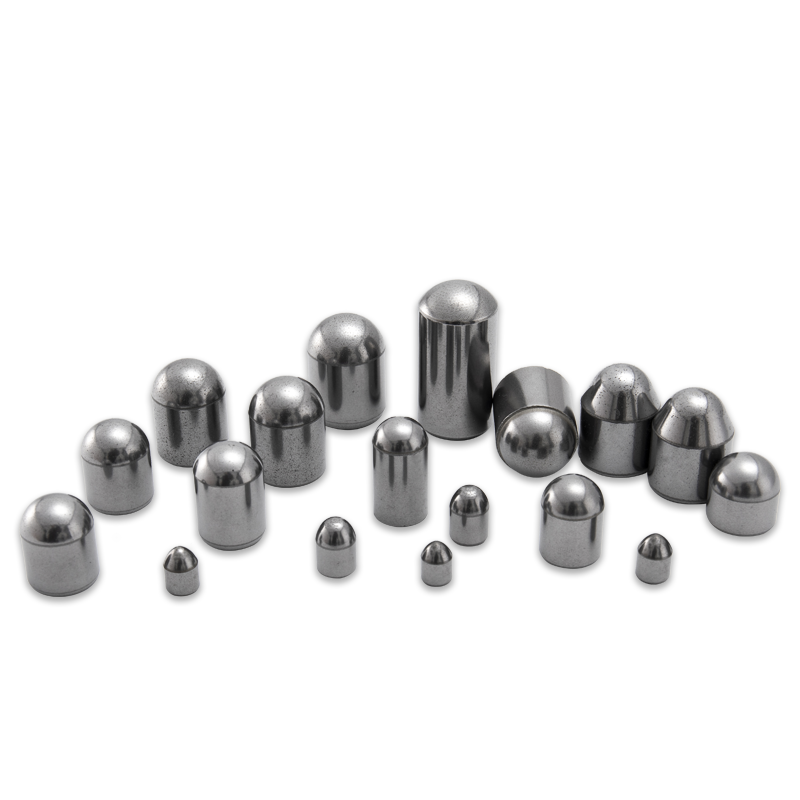
Tungsten Carbide Inserts for TBM CutterheadsThese inserts offer abrasion resistance and impact toughness, suitable for varied ground conditions. They serve as a starting point for matching material grade to rock type and quartz content.View Product →Insert Geometry: More Than a Sharp Edge
TBM inserts are often pictured as sharp teeth, but in fact they work more like scrapers and crushers. The geometry of the insert determines how the load is transferred to the rock, how the insert wears, and how much force is needed to penetrate.
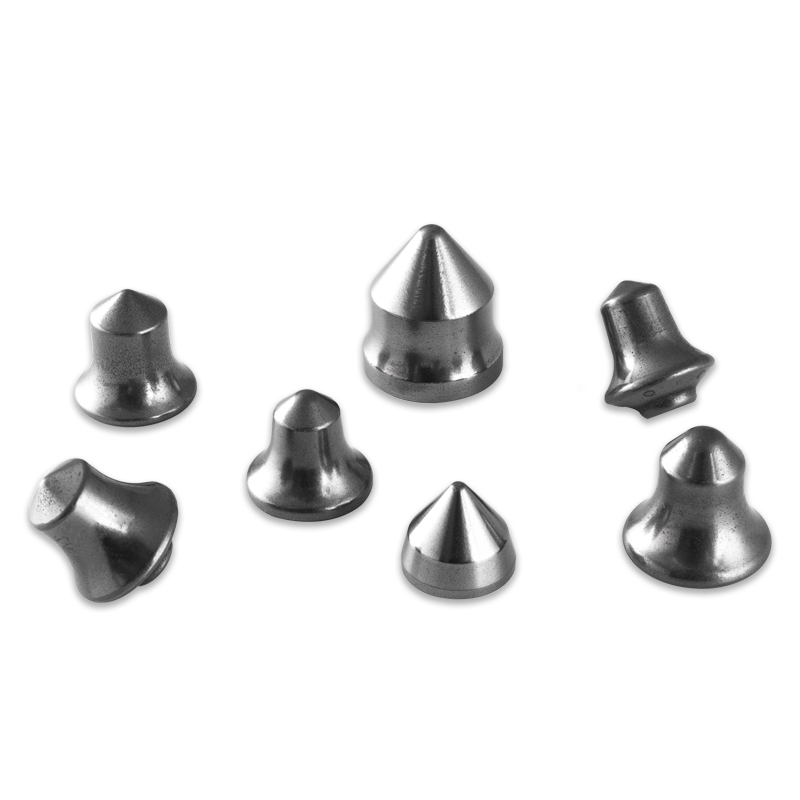
The main geometry features are the nose shape, the nose angle, the body taper, and the mounting section. A conical tip is common and is effective for penetrating rock. A spherical or blunter nose spreads the contact area, reduces the risk of chipping, and is sometimes preferred for very hard or massive rock. A chisel-shaped tip can be used in some designs to create a linear break. There is no single best geometry. The choice depends on the expected rock and the design of the cutterhead.
In addition to the tip shape, the insert must be held firmly in the holder. A loose insert vibrates, creates a slot in the holder, and wears prematurely. The body of the insert is often made with a slightly larger diameter than the hole or slot so that it can be pressed or brazed into place. This fit is one reason that the tolerances of the machining work matter. Even the correct grade cannot compensate for a poor fit.
A good understanding of insert geometry also helps a tunnel team recognize why some inserts wear in a cone-shaped pattern and why others develop a flat. The wear pattern often provides information about the contact angle. This knowledge is useful for adjusting the cutterhead parameters or changing the insert type.
For an overview of how TBM insert design affects performance, you can refer to this article on tungsten carbide inserts for tunnel boring machines.
Selection Factors for TBM Inserts
Selecting the right TBM insert is not a one-time decision. It is an iterative process that starts with the geological data for the tunnel and continues through tests on the cutterhead. The following table lists the most important selection factors.
| Factor | Impact on insert performance | What data is usually needed |
|---|---|---|
| Rock abrasiveness | Determines how fast the insert loses material | Quartz content, Cerchar abrasivity index |
| Compressive strength | Sets the peak load the insert must carry | Uniaxial compressive strength (UCS) |
| Fracturing and joints | May create shock loads and edge chipping | Joint spacing, rock mass rating |
| Cutterhead design | Influences the force and the wear pattern on each insert | Cutter diameter, spacing, rotation speed |
| Insert mounting | Affects load transfer and retention | Slot dimensions, holder design, tolerance |
This is a place where a supplier can add value. A professional manufacturer will not simply label an insert as "hard" or "for rock." They will ask for the geology report, the cutterhead specification, and the required insert size. They may compare the selected grade and geometry with typical performance data. This dialogue is particularly important when the tunnel passes through several geological zones. A hard-rock insert may work for most of the route, but a softer section or a fault zone can create rapid changes.
A common practice is to test one or two insert designs at the outset of a project. The observation period does not have to be long. If the inserts show heavy chipping, the grade is too hard or the geometry too pointed. If the inserts wear quickly but the rock is not particularly abrasive, the grade is too soft or the cutterhead parameters are wrong. These tests reveal how the actual rock behaves under the machine, which is always better than a lab-only guess.
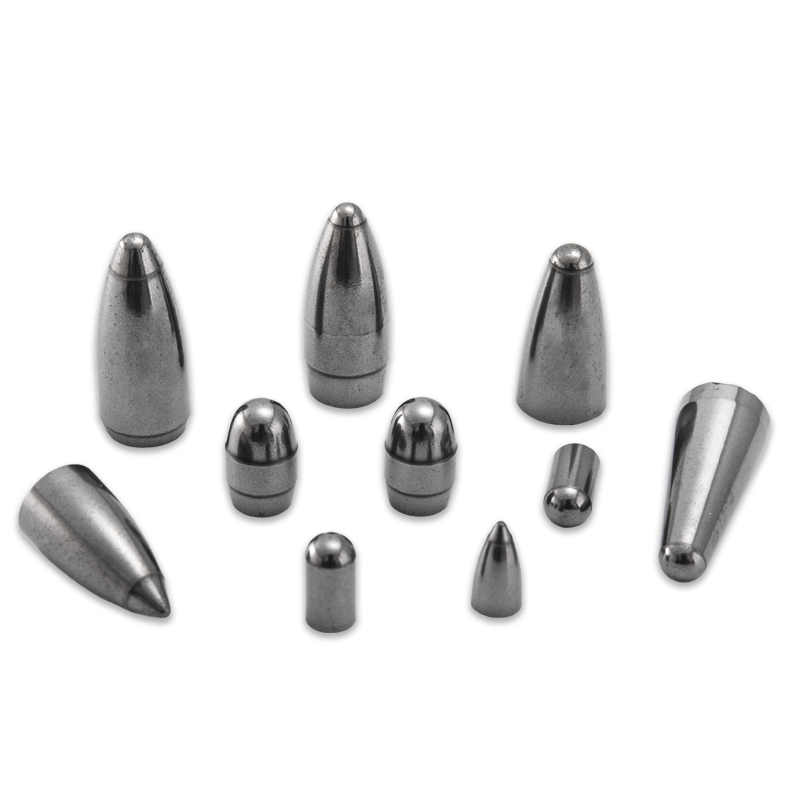
Tungsten Carbide Rock Drilling Tools for Harsh ConditionsThese tools are designed to withstand impact and wear with improved hardness and toughness. Consistent manufacturing ensures reliable performance across batches, critical for drilling operations.View Product →Manufacturing Quality and the Consistency Problem
The grade and geometry are the visible part of insert selection. The invisible part is manufacturing consistency. Tungsten carbide is produced from powder. If the powder is poorly mixed, if the grain size distribution drifts, or if the sintering process is not controlled, the inserts from one batch may behave differently from another. In a tunnel, this inconsistency is very hard to accept because the cutterhead carries many inserts at once. If one out of a hundred inserts wears rapidly, it can create a local area on the tunnel face that is not fully cut, leaving a large piece of rock that must be broken by the neighboring cutter.
Producing a reliable TBM insert requires an integrated production line. In our facility in Changzhou, China, we start with tungsten carbide powder pressing using TPA presses. This method uses a controlled pressure profile to create a green body with a consistent shape and density. The green body is then sintered in low-pressure sintering furnaces. Low-pressure sintering reduces the final residual porosity and produces a finer and denser structure. A dense structure with few pores is directly connected to better wear resistance and a lower risk of fracture.
After sintering, the inserts are ground to final dimensions and surface finish. Precision grinding is done on five-axis CNC tool grinders, and the tool geometry is verified with digital tool-setting equipment. For round tools and other precision components, our production follows a recognized German production standard. This system gives us a benchmark for tolerances and tool life. The inspection instruments are part of the process; they are not removed from the production environment and used only for final checks. They are used to control the machine grinding operation as well.
The company is certified to ISO9001 and ISO14001. These certifications indicate that the production system is audited and that environmental and quality management processes are in place. For a tunnel project, this level of control supports a simple but important goal: the inserts that arrive at the site should behave consistently with the inserts that were tested.
Real-World Insert Life and Cost
The cost of a TBM insert is small compared to the cost of tunnel downtime. This is the reason that insert selection has to be seen as a productivity factor, not only as a purchasing line item.
| Scenario | Expected insert life | Needed replacements | Downtime cost |
|---|---|---|---|
| Poorly matched grade | 150 m between changes | High | High |
| Well-matched grade | 450 m between changes | Low | Low |
A poorly matched insert can also create geometry problems. If an insert wears unevenly, the cutter disc may stop rotating and cut a flat edge into the rock. This increases the cutting resistance for the whole cutterhead. Tunneling contractors know that the cost of an unexpected cutterhead stop is not only the labor or the new parts; it is also the lost production and the risk to the schedule.
An effective practice is to track insert life per zone of the tunnel, in meters of advance. This creates a simple performance curve that can be compared with the rock type. When the insert reaches the end of its useful life, a planned replacement can be made at a safe location. The material used in the insert, its geometry, and its manufacturing quality all contribute to that plan.
The relationship between insert choice, rock conditions, and cutterhead performance is covered in more depth in our article on why TBM tungsten carbide inserts are crucial for underground construction.
The TBM tungsten carbide insert is a small component with a huge influence on tunnel progress. The material has to be tough against abrasion. The geometry has to match the rock. The grade has to match the actual cutterhead. And the manufacturing has to produce consistent parts. When these factors fall into place, the insert performs as designed for a predictable distance. When one factor is wrong, the machine is the one that suffers. Buyers and tunneling engineers should treat insert selection as a technical negotiation: gather the geology data, discuss the cutterhead design, and require a supplier who can control the whole production process. The days that the cutterhead stays down are more expensive than the insert itself.
Our Products //
Related Products
If you are interested in our products, please consult us
