

 English
 русский
Tungsten Carbide: Properties, Applications, and How to Choose the Right Parts
Industry News-Ask a maintenance engineer why the picks on a longwall shearer wear out every few shifts, and the answer almost always comes back to the same material: tungsten carbide. Ask a machining supervisor why an insert fails mid-cycle, and you will hear the same name. Tungsten carbide is not a single product, though. It is a family of hard, wear-resistant composites whose microstructure, binder content, and manufacturing quality decide whether a part lasts a week or a year.
Content
What Tungsten Carbide Is — and Is Not
Tungsten carbide (WC) is a chemical compound of tungsten and carbon, typically about 94% tungsten by weight. In industrial parts you rarely see it in pure form. Individual WC grains are cemented together with a ductile metallic binder, almost always cobalt or nickel, to form a composite called cemented carbide. The resulting hardness usually lands between 1,700 and 2,400 HV, close to corundum on the Mohs scale, while the binder supplies the toughness that prevents the material from acting like a ceramic.
The binder content is the primary tuning lever. More cobalt gives the grade higher impact resistance but lowers hardness; less cobalt makes it harder and more resistant to abrasion but more likely to chip under shock. This is why "tungsten carbide" is not an adequate specification on its own. Grade choice matters as much as part geometry.
Key properties that drive its use:
- Young's modulus of 550–700 GPa, roughly double that of steel
- Hardness of 1,700–2,400 HV (about 9 on the Mohs scale)
- Compressive strength among the highest of any engineering material
- Thermal conductivity of about 84 W/(m·K), which helps carry heat away from cutting edges
- Melting point near 2,870 °C for the WC compound itself
What the Steel Comparison Actually Tells You
Steel is tougher; tungsten carbide is stiffer, harder, and far more wear-resistant. For cutting, drilling, milling, and forming tools, those differences translate into longer tool life and better dimensional control, provided the grade is matched to the job.
| Property | Tungsten carbide | Tool steel | What it means in practice |
|---|---|---|---|
| Hardness | 1,700–2,400 HV | 600–900 HV | Carbide edges hold sharpness far longer |
| Young's modulus | 550–700 GPa | ~200 GPa | Less deflection under cutting load |
| Wear resistance | Excellent | Moderate | Longer life in abrasive rock and soil |
| Toughness | Moderate, binder-dependent | High | Steel bends; carbide can chip under severe shock |
| Cost per workpiece | Lower in abrasive jobs | Higher consumable cost | Higher initial price, longer usable life |
The stiffness and hardness explain why carbide machines hardened steel, drills through rock, and mills asphalt all day. They also explain the one thing you must respect: carbide does not bend. If a tool is run with excessive vibration, impact, or interrupted cutting, a carbide edge can fracture where a steel edge would simply deflect. Selection and machine condition decide whether that fracture happens in the first minute or never at all.
Where Tungsten Carbide Earns Its Keep
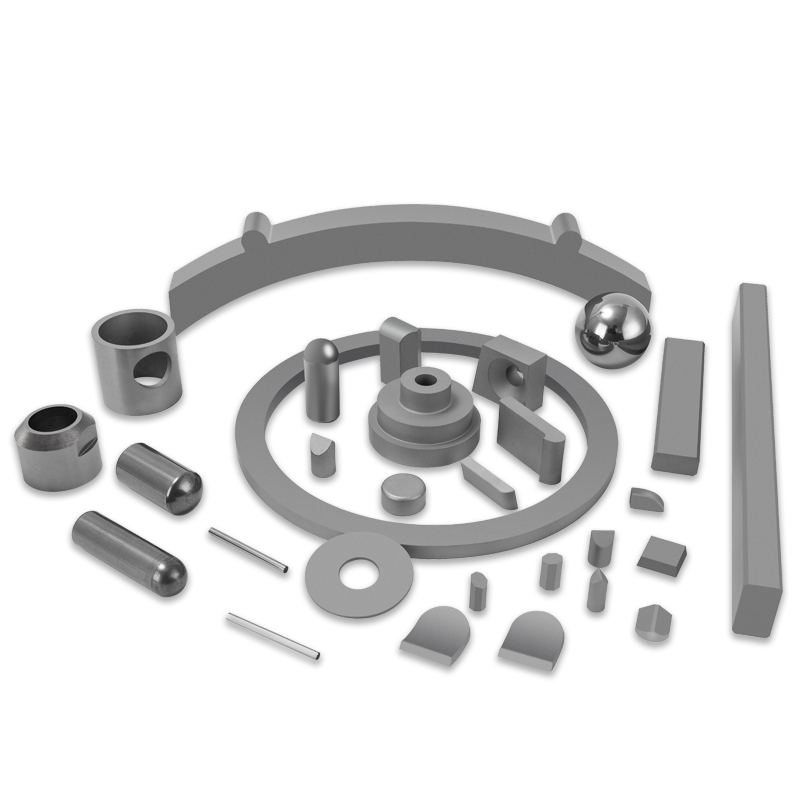
Almost every tungsten carbide part you will buy falls into a small set of product families. Each family has its own geometry, grade requirements, and typical failure modes.
| Product family | Typical application | Main failure when misapplied |
|---|---|---|
| Cutting blades | Turning, milling, grooving, threading | Chipping or edge cratering |
| Rock-drilling tools | Blast holes, exploration, anchor holes | Wear flats or carbide breakage |
| TBM inserts | Tunnel boring machine cutter heads | Fracture in hard or mixed ground |
| Road-milling tools | Asphalt and concrete milling | Rapid tip wear or tip loss |
| Round-shank picks | Coal shearers, roadheaders | Excessive wear on hard inclusions |
| Stamping dies | Sheet metal stamping and forming | Edge wear, chipping, loss of profile |
Cutting blades for metal machining
In metal cutting, tungsten carbide blades run at high spindle speeds and elevated temperatures. The grade must resist abrasive wear and thermal softening at the same time. Coatings such as PVD or CVD titanium-based layers extend life further, especially on interrupted cuts. For a production shop the payoff is easy to measure: fewer tool changes, tighter dimensional tolerance, and a lower cost per finished piece.
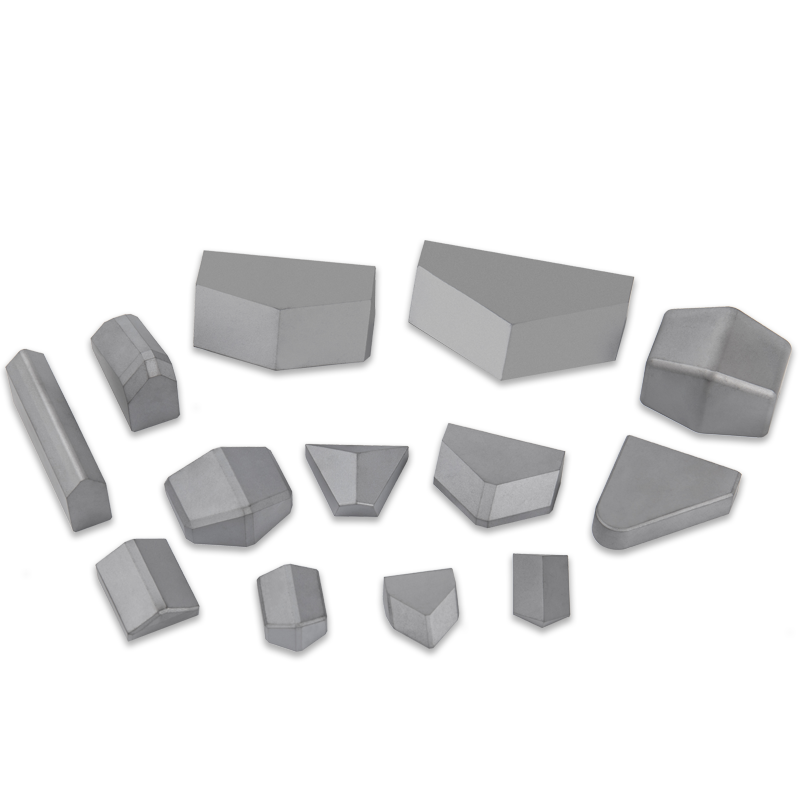
 Tungsten Carbide Cutting Blade for High-Speed Metal MachiningThis blade is designed for production shops seeking longer tool life and tighter tolerances. Its grade and optional PVD or CVD coatings help resist wear and thermal softening during interrupted cuts.View Product →
Drilling and tunneling tools
Rock drilling is the opposite of cutting steel in one important way: shock dominates. A hammer drill strikes the carbide bit thousands of times per minute, and a tunnel boring machine presses inserts into mixed rock with enormous force. Higher-cobalt grades absorb those impacts; harder grades resist wear. Because every site has different rock conditions, the best suppliers will adjust the grade rather than push a one-size-fits-all part.
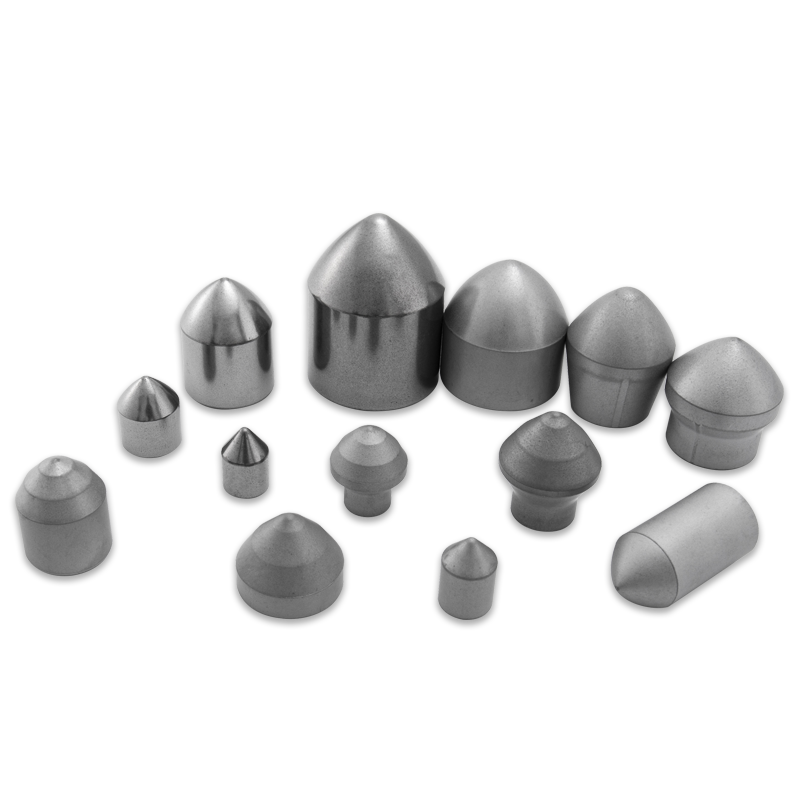
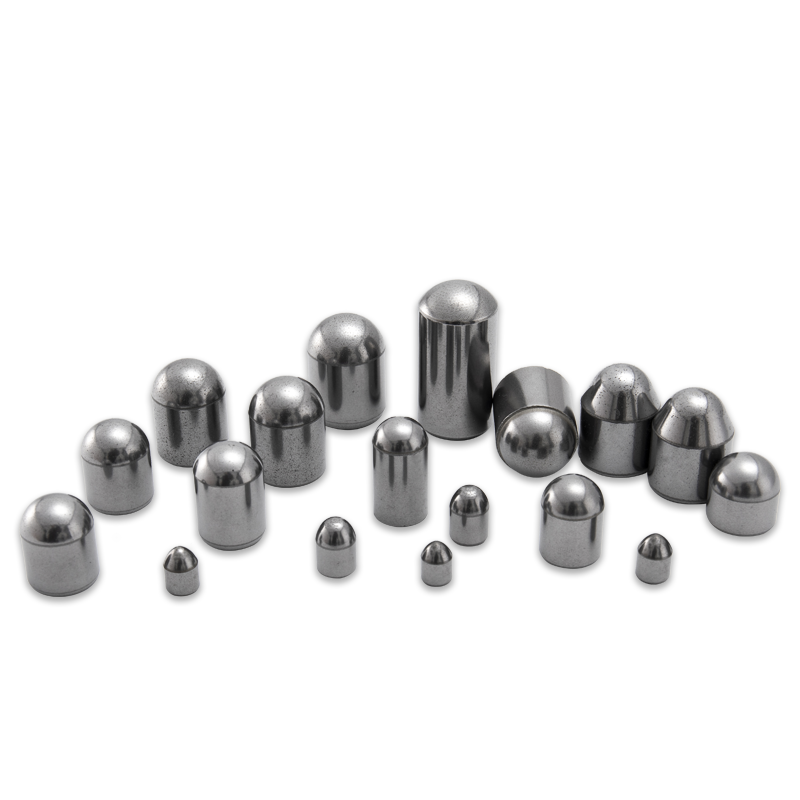
Tungsten Carbide Inserts for Tunnel Boring and Rock DrillingThese inserts combine abrasion resistance and impact toughness for mixed ground conditions. They suit tunnel boring, road milling, and coal mining where hard inclusions can cause tip loss.View Product →
Road milling and coal extraction
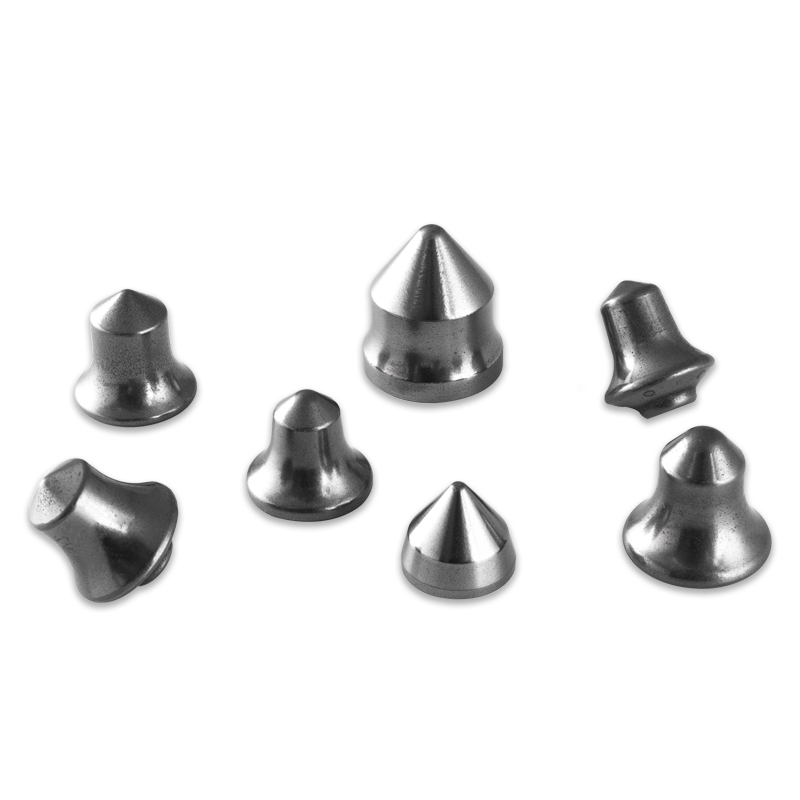
Road-milling tools rotate against asphalt and concrete at high speed, demanding a tip that stays sharp under heat and impacts. In coal mining, round-shank picks have a similar job: cutting coal is easy, but seams often include pyrite, sandstone, or other hard inclusions that punish the tip and the steel shank. Tip loss is a common failure when the brazing process or the grade selection is not matched to the ground conditions.
Stamping dies for forming
With stamping dies, dimensional control matters as much as wear resistance. A worn die edge changes the bend radius or the trim line, and reworking dies is far more expensive than the carbide blank itself. Fine-grain carbide with a consistent binder phase keeps its profile over millions of strokes, which is why stamping plants treat grade certification as a requirement rather than a request.
Tungsten Carbide Stamping Die for High-Volume FormingA die that maintains profile over millions of strokes, offering wear resistance and dimensional stability. Fine-grain carbide with consistent binder helps reduce rework and extend service life.View Product →How a Carbide Part Is Made, and Why It Matters to Buyers
You do not have to run a powder plant to appreciate what differentiates a reliable carbide part from an unreliable one. A short version of the process explains it:
- Powder preparation: tungsten carbide powder, cobalt or nickel binder, and grain growth inhibitors are weighed and milled to a precise composition.
- Pressing: the powder is shaped in hydraulic or isostatic presses to make a green body near the final outline.
- Sintering: the green body is heated in a controlled atmosphere, often with low pressure applied, to remove porosity and bond the carbide grains into a dense part.
- Grinding: diamond wheels on CNC tool grinders generate the final cutting edges and tolerances. On a typical cutting blade or pick shank, this step decides whether the part fits the tool holder and cuts steadily.
- Inspection: digital tool presetters, profile projectors, and hardness testers verify geometry and material quality before the part ships.
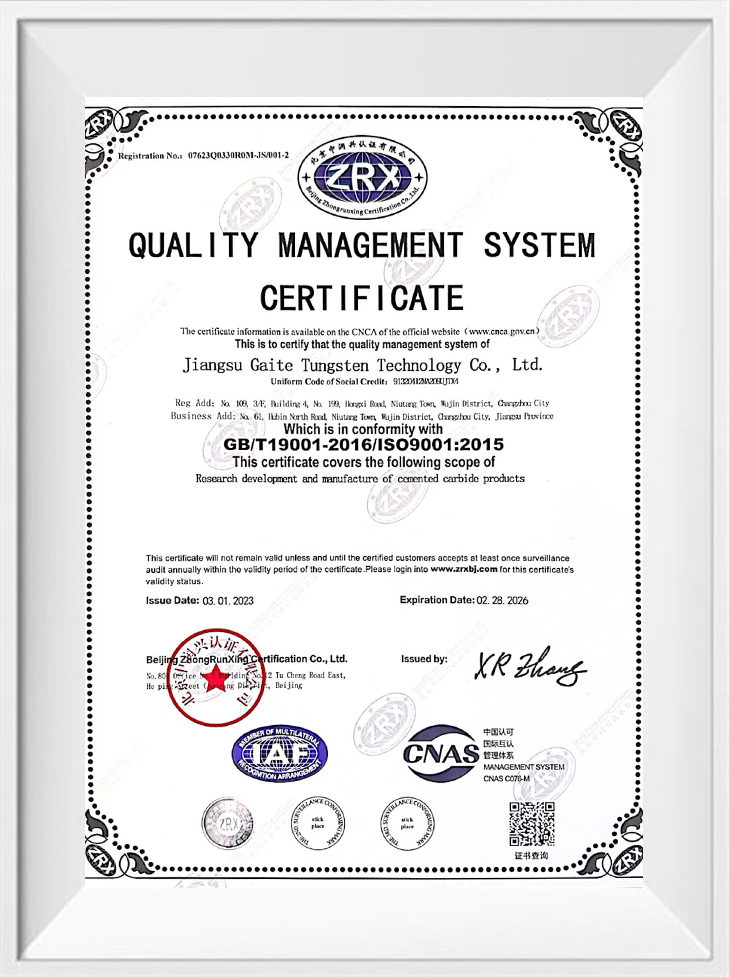
The practical message is simple: a part whose powder mix, pressing, or sintering is sloppy will fail fast no matter how good the drawing looks. That is why experienced buyers ask about equipment: low-pressure sintering furnaces, TPA presses, and five-axis tool grinders. They also ask about the quality system that covers the whole chain. ISO 9001 is the baseline; ISO 14001 shows the plant also manages grinding dust, coolant, and waste responsibly.
What to Verify Before You Place an Order
The most expensive tungsten carbide part is the one that fails early. Avoid that cost by checking four things before committing to a supplier.
- Grade specification: ask for the WC grain size, binder content, and hardness range in writing. The grade should be linked to your actual workpiece material or rock type, not to a generic product name.
- Geometry and tolerance: cutting tools and picks are only as good as their fit. Request the inspection report for outer diameter, edge radius, and seating dimensions.
- Quality certification: ISO 9001 documents the quality system, and ISO 14001 indicates that dust and waste are handled properly. Both are useful signals when you cannot visit the factory.
- Supply stability: tungsten concentrate is produced in a limited number of regions, so raw material prices and lead times can shift quickly. A supplier with buffer stock and transparent lead times protects your production schedule.
If you want to understand how carbide behaves under real workshop conditions, this practical review of tungsten carbide properties and manufacturing is a good next step.
The right tungsten carbide part is not the cheapest, the heaviest, or the one with the most aggressive hardness claim. It is the part specified for your rock, your steel, your machine stiffness, and your production volume. Get the grade and geometry right once, and you will spend less time changing tools and far less money on replacement parts. That consistency under load is what makes tungsten carbide the backbone of modern cutting and wear applications.
To see which product families fit your process, browse the full range of tungsten carbide products.
Our Products //
Related Products
If you are interested in our products, please consult us
