

 English
 русский
Tungsten Carbide Inserts for Tunnel Boring Machine: A Practical Field Guide
Industry News-Anyone who has spent a shift on a tunnel boring machine knows the arithmetic that governs the whole job: metres bored per set of cutters, and hours lost when those cutters have to come off the head. Tungsten carbide inserts for tunnel boring machines sit right in the middle of that arithmetic. They are small parts, often no wider than a thumb, yet they decide whether a cutter ring finishes its shift or comes back chipped, flat and useless.
We have been making hardmetal products in Changzhou since 1990, and much of that work ends up on mining, drilling and tunnelling equipment. What follows is a practical look at what these inserts do underground, how to match a grade to your ground, and what is worth checking before you place an order.
Content
- 1 What Carbide Inserts Actually Do on a TBM
- 2 The Insert Family on a Cutterhead
- 3 Read the Ground Before You Read a Catalogue
- 4 Grades, Grain Size and Cobalt in Plain Language
- 5 When Inserts Fail, and What the Failure Is Telling You
- 6 What to Check Before You Buy
- 7 Tooling That Works Alongside the TBM
- 8 Choosing a Partner Rather Than a Part Number
What Carbide Inserts Actually Do on a TBM
A tunnel boring machine does not cut rock the way a saw cuts timber. Disc cutters are pressed into the face under enormous thrust, and the rock fractures beneath the contact point. Every insert on the head therefore lives with high compressive stress, abrasion from rock chips and fines, and repeated impact each time a cutter rolls through the face.
Carbide shows up in more places than most people expect:
- Gauge cutters and gauge buttons, where the head has to hold its finished diameter against constant side wear.
- Face inserts on carbide-tipped disc rings, used where rock is abrasive enough that a plain steel ring wears too quickly.
- Scraper tips and ripper teeth for softer ground, where the job is to lift material rather than crush it.
- Wear studs and plates on the cutterhead face, muck buckets and screw conveyors, protecting steel structures from the same abrasive spoil.
All of these parts share one requirement. The carbide has to stay fixed in its holder, hold a working edge for as long as possible, and fail in a predictable way rather than shatter.
The Insert Family on a Cutterhead
Different positions on a cutterhead ask different things of the same material. Gauge inserts want maximum wear resistance because they set the tunnel diameter. Face inserts want a balance of wear resistance and impact toughness. Scraper tips want toughness and a sound braze joint above almost everything else.
| Insert position | Main job | Property that matters most |
|---|---|---|
| Gauge cutter buttons | Hold finished tunnel diameter | Wear resistance and hardness |
| Disc ring face inserts | Crush and penetrate rock | Balanced toughness and wear resistance |
| Scraper and ripper tips | Lift soft or broken ground | Impact toughness and braze strength |
| Cutterhead wear studs | Protect steel structures | Hardness and abrasion resistance |
| Muck bucket and conveyor liners | Resist sliding abrasion | Hardness with reasonable toughness |
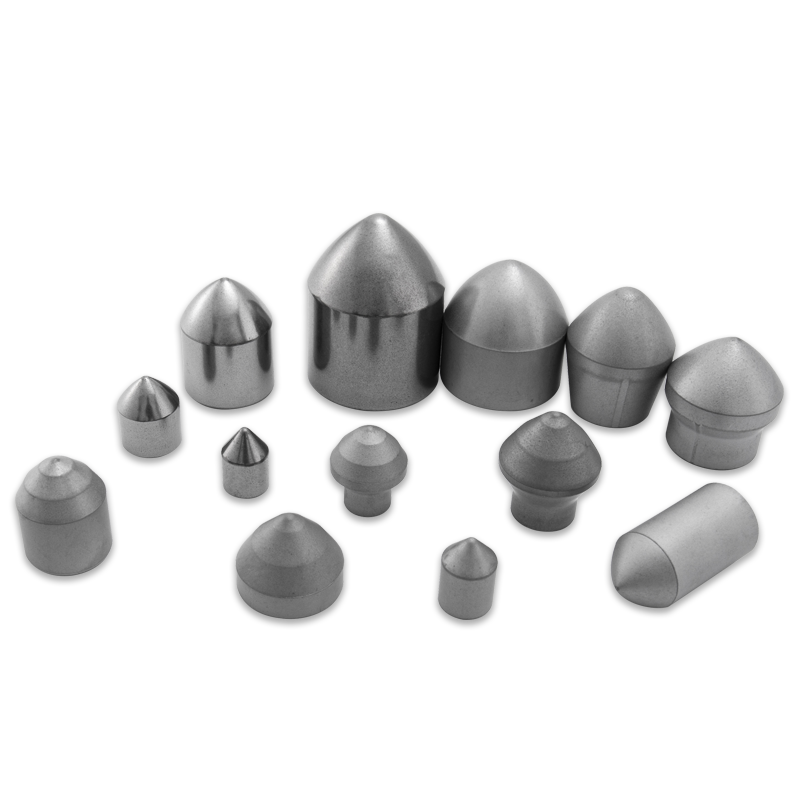
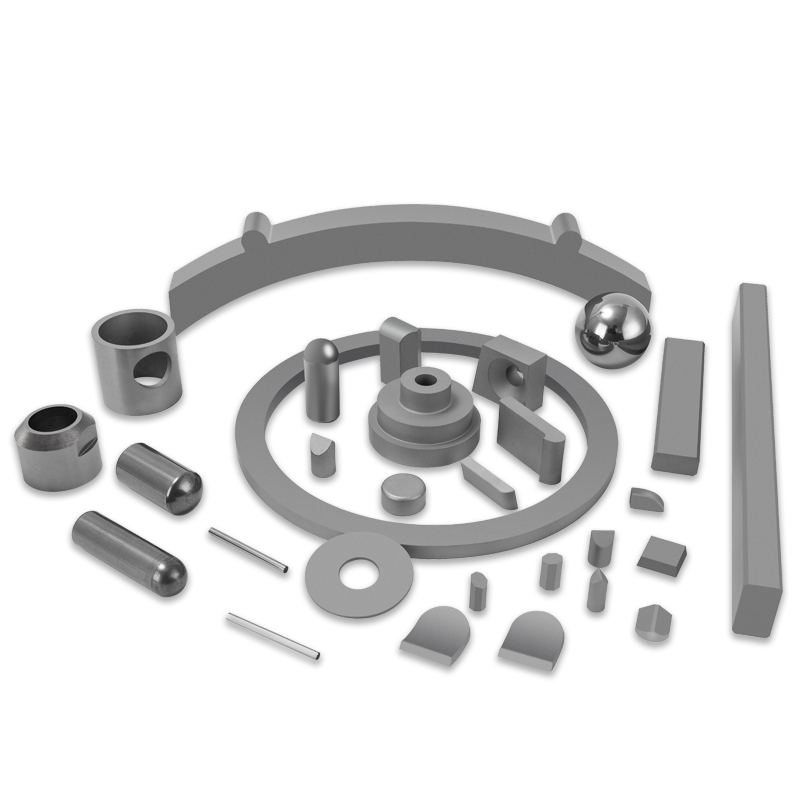
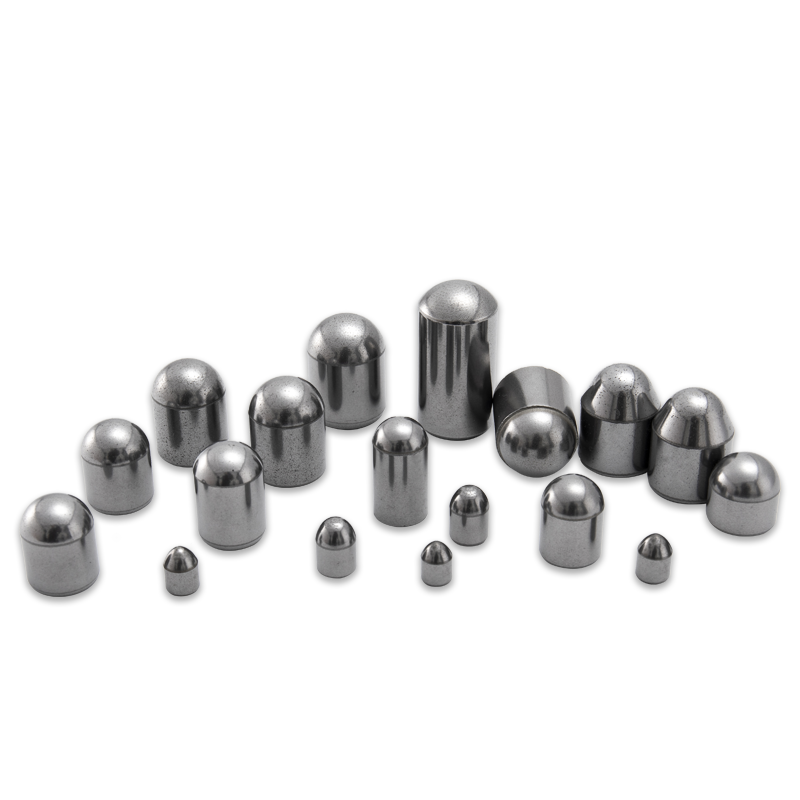
If you need a starting point, our own insert range for tunnel boring machines covers the gauge, face and wear positions described above, in standard sizes as well as to drawing.
 Tungsten Carbide Inserts for Tunnel Boring MachinesCovers gauge, face and wear positions with multiple grades for medium-hard rock, available in standard sizes or to drawing.View Product →
Read the Ground Before You Read a Catalogue
The most common mistake we see is choosing a grade from a catalogue without looking at the rock. Two tunnels of the same diameter can demand completely different inserts.
Four things are worth knowing before you specify anything:
- Compressive strength of the rock, which sets how much thrust each cutter has to carry.
- Abrasiveness, usually expressed as a Cerchar abrasivity index, which tells you how fast edges will dull.
- Quartz content and grain size, because hard, fine-grained minerals polish carbide quickly.
- Structure of the rock mass, since fractured, blocky ground creates impact loading that a massive face does not.
Mixed face conditions are the hardest case. When the head passes from clay into granite in a single rotation, inserts see both sliding wear and sharp impact within seconds. Coarse-grain, higher-cobalt grades are usually the safer choice there, even though they start out slightly softer.
Grades, Grain Size and Cobalt in Plain Language
Tungsten carbide for cutting tools is tungsten carbide grains held together by a cobalt binder. Two variables do most of the work: how much cobalt is present, and how coarse the carbide grains are.
- Low cobalt, fine grain: the hardest and most wear-resistant combination, good for abrasive rock with a stable, predictable face.
- Medium cobalt, medium grain: the general-purpose middle ground that suits most TBM work.
- Higher cobalt, coarse grain: the toughest option, chosen for blocky ground, high impact and mixed faces.
Hardness and toughness always trade against each other, so no grade wins everywhere. What a good manufacturer does is hold the grade consistently, batch after batch, so that the performance you validated in the first trial is the performance you get on the tenth order.
Processing matters as much as chemistry. Porosity left over from sintering acts as a crack starter, so vacuum or low-pressure sintering gives a far more reliable insert than a part pressed and sintered cheaply.
When Inserts Fail, and What the Failure Is Telling You
Carbide usually tells you why it failed, if you look at the worn parts before they go into the scrap bin. Examining the pattern often saves a whole cutter set.
| What you see | Likely cause | What to change |
|---|---|---|
| Chipping or spalling | Impact beyond grade toughness | Move to higher cobalt or coarser grain |
| Flattened, polished tips | Abrasion outrunning hardness | Lower cobalt or a finer grain grade |
| Grey, etched surface | Binder attack from water and slurry | Check binder choice and drainage |
| Loose or missing studs | Poor hole fit or weak fixing | Review interference fit and hole quality |
| Cracks around the tip | Thermal and mechanical fatigue | Review braze cycle and cutting parameters |
Recording wear patterns per chainage, rather than per cutter, is a habit worth building. It turns a vague sense that inserts are not lasting into data you can take to a supplier.
What to Check Before You Buy
Insert prices vary, but the cost of a failed cutter set is measured in downtime rather than in the price of the parts. A few simple checks separate a serious manufacturer from a trading company.
- Batch traceability, so a problem grade can be traced back to a pressing and sintering run.
- Hardness testing on finished parts, not only on a certificate from the powder supplier.
- Metallographic checks for porosity, binder distribution and grain structure.
- Dimensional control on the bore and head of each insert, since fit in the holder decides whether it stays put.
- Management system certification such as ISO 9001 and ISO 14001, which at least confirms a documented process.
- Willingness to run a trial batch on your machine before you commit to volume.
We wrote a longer walkthrough of selection criteria and supplier questions for TBM tungsten carbide inserts if you want to go deeper into tool life planning.
Tooling That Works Alongside the TBM
A tunnel project rarely needs cutterhead inserts alone. Probe drilling ahead of the face, forepoling, ground anchors and the drill-and-blast sections that often link two TBM drives all consume hard rock drilling tools. The material logic is familiar: carbide buttons or inserts set into a steel body, doing the cutting while the steel carries the load.
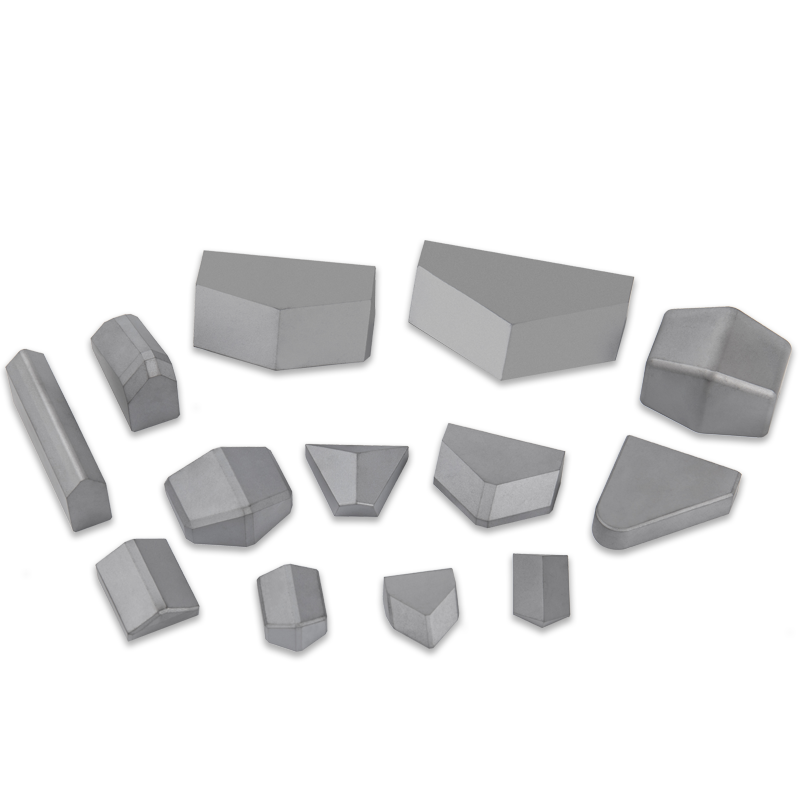
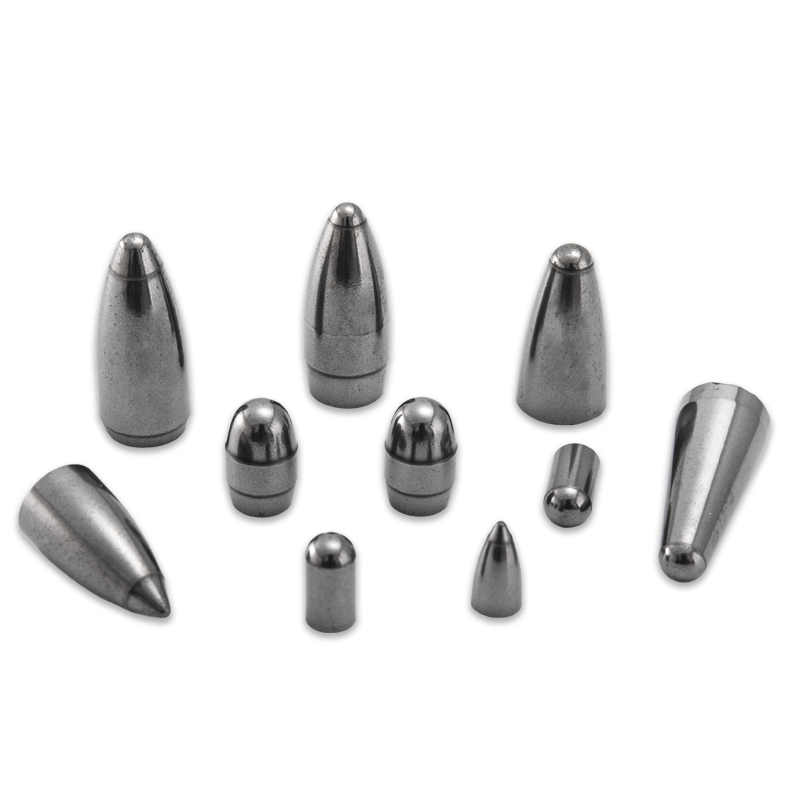
Tungsten Carbide Rock Drilling Tools and GradesBrowse cemented carbide drilling tools for impact and wear conditions, with grades listed for rock drilling and mining applications.View Product →
Roadheaders and continuous miners are the other half of the picture. On softer ground, or in coal, excavation is done with conical picks on a rotating head rather than with discs. Round shank picks with a carbide tip are consumables in exactly the same way cutter inserts are, and the same questions about grade, tip retention and cost per cubic metre apply.
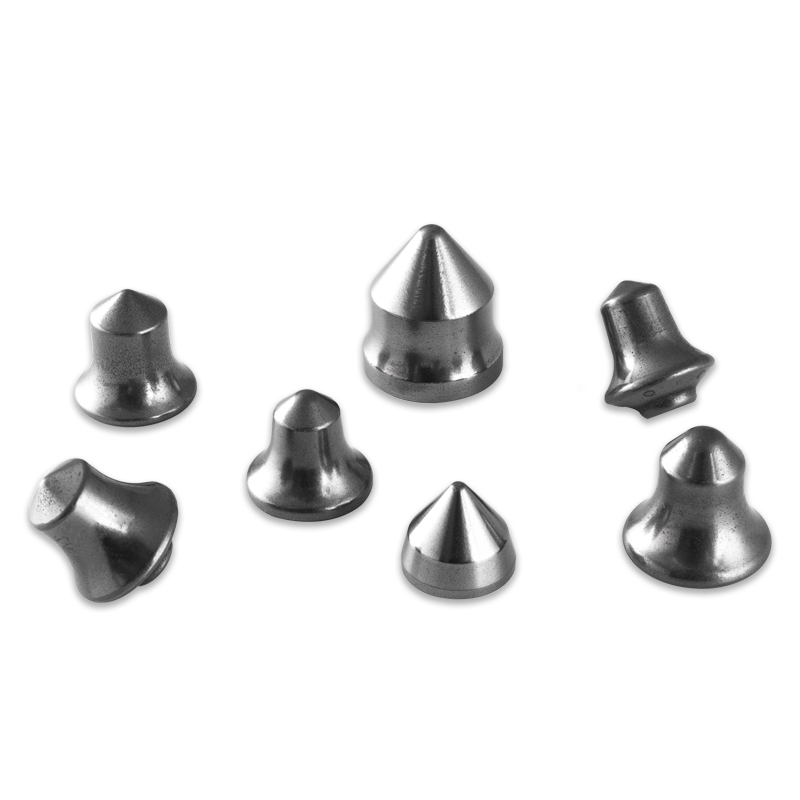
Tungsten Carbide Round Shank Picks for Coal MiningDesigned for coal and semi-coal rock, these picks offer high impact toughness and suit high-power heavy coal cutter heads.View Product →Choosing a Partner Rather Than a Part Number
Insert selection is not a one-off purchase decision. Ground conditions change along the alignment, cutter designs get revised, and the grade that performed well in the first kilometre may need adjusting in the fifth. What helps most is a supplier who can talk about the rock face as comfortably as about the powder, and who can produce a consistent part rather than a single impressive sample.
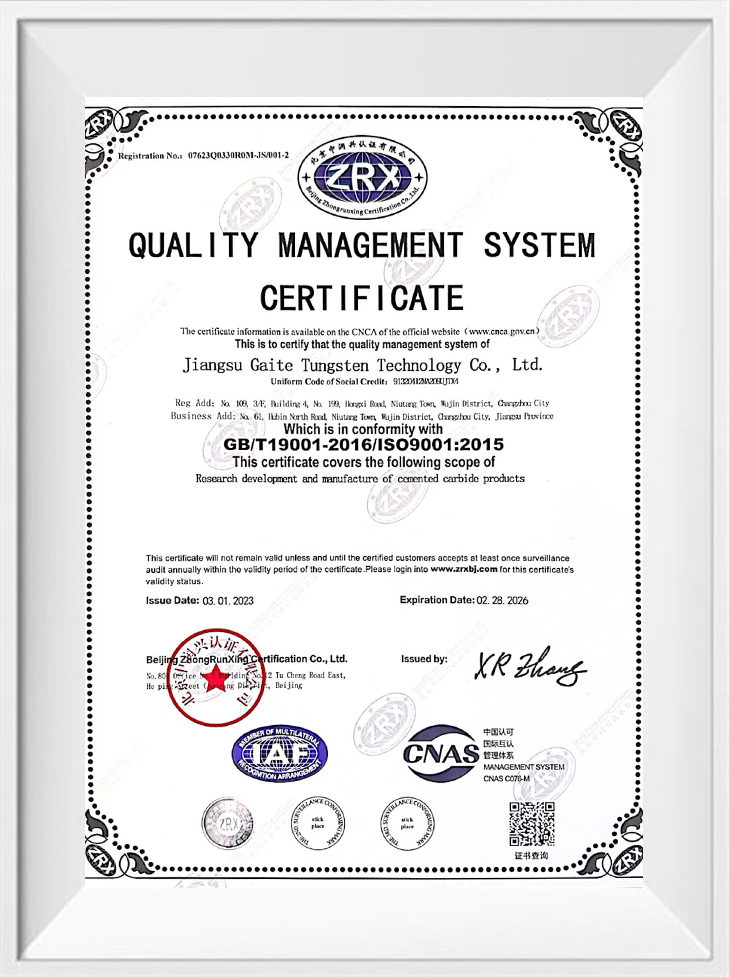
Our workshop in Changzhou handles pressing, low-pressure sintering and finish grinding in house, and we work from customer drawings as readily as from standard part numbers. If you are specifying carbide for a tunnel project and want to talk through grades, geometry or lead times, Jiangsu Gaite Tungsten Technology is glad to look at your drawings and wear records and suggest a starting point.
Our Products //
Related Products
If you are interested in our products, please consult us
