

 English
 русский
The Hardest Metal on Earth: Why Tungsten Carbide Dominates Modern Industry
Industry News-Content
The Composition and Synthesis of Tungsten Carbide
Tungsten carbide (WC) is a dense, inorganic chemical compound composed of equal parts tungsten and carbon atoms. In its most basic form, it exists as a fine grey powder, but it can be pressed and formed into complex shapes through a process known as sintering. During this process, the powder is mixed with a binder metal—most commonly cobalt or nickel—and heated to extreme temperatures. This creates a "cemented carbide" structure where the hard carbide particles are embedded in a ductile metal matrix, resulting in a material that combines incredible hardness with a degree of fracture toughness that pure ceramics lack.
The physical properties of tungsten carbide are extraordinary. It possesses a Young's modulus of approximately 530–700 GPa, making it significantly stiffer than steel. Its density is roughly double that of standard steel, giving tools made from this material a substantial, high-quality feel. Because it ranks between 9 and 9.5 on the Mohs scale, it is nearly as hard as diamond, which allows it to maintain a sharp cutting edge even under the most grueling industrial conditions.
Industrial Applications and Machining Excellence
The primary use of tungsten carbide is in the production of cutting tools for machining. Whether it is milling, drilling, or turning, carbide inserts can operate at much higher speeds than high-speed steel (HSS) while resisting the intense heat generated by friction. This thermal stability prevents the tool from softening or deforming, which is critical for maintaining tight tolerances in aerospace and automotive manufacturing.
Key Sectors Utilizing Tungsten Carbide
- Mining and Drilling: Used in rock drill bits and tunnel boring machines due to its wear resistance.
- Metalworking: High-precision end mills, lathes, and saws for cutting hardened alloys.
- Surgical Instruments: Tips of forceps and scissors to ensure longevity and grip.
- Consumer Electronics: Internal parts for vibration motors and precision ballpoint pen tips.
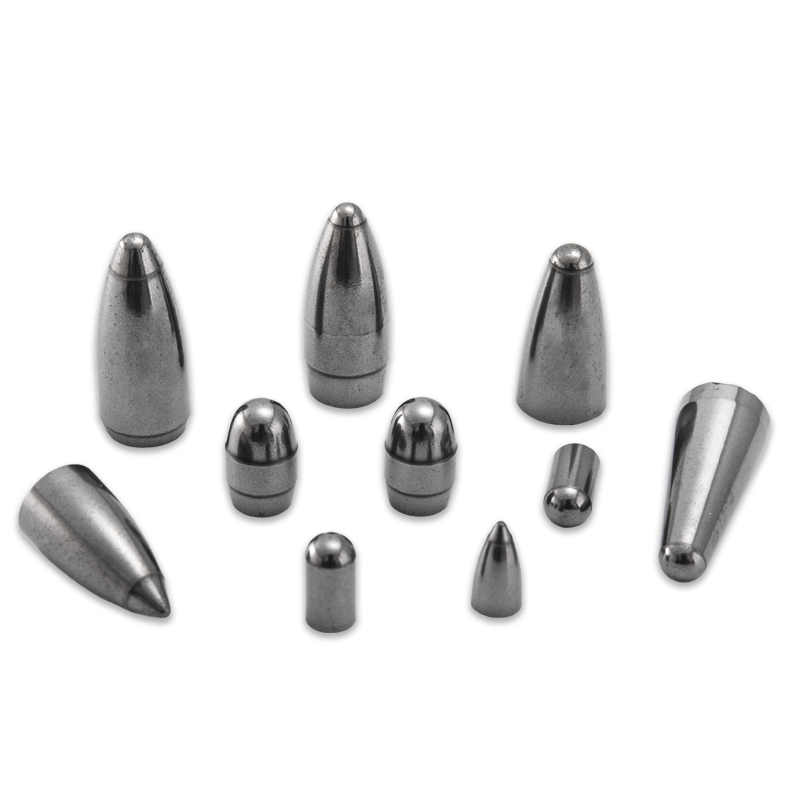
Comparison of Tungsten Carbide vs. Stainless Steel
To understand the practical advantages of tungsten carbide, it is helpful to compare it against stainless steel, the standard material for many heavy-duty applications. While steel is cheaper and easier to fabricate, tungsten carbide offers a level of performance that justifies its higher cost in high-wear environments.
| Property | Tungsten Carbide | Stainless Steel (316) |
| Mohs Hardness | 9.0 - 9.5 | 5.0 - 6.0 |
| Density (g/cm³) | ~15.6 | ~8.0 |
| Melting Point | 2,870°C | 1,400°C |
| Scratch Resistance | Extremely High | Moderate |
Maintenance and Handling of Carbide Tools
Despite its incredible hardness, tungsten carbide is relatively brittle compared to steel. This means it is susceptible to chipping or shattering if subjected to heavy impact or dropped on hard surfaces. Proper handling involves using rigid machinery setups to minimize vibration, as "chatter" is the most common cause of carbide tool failure. Additionally, sharpening tungsten carbide requires specialized equipment, such as diamond-coated grinding wheels, because standard abrasives will simply wear away against the carbide's surface.
Environmental factors also play a role in the longevity of the material. While tungsten carbide is highly resistant to oxidation and corrosion, the "binder" (cobalt) can be leached out by certain acidic coolants or chemicals. Using the correct lubricants and storage methods ensures that the material retains its structural integrity over years of heavy use.
Our Products //
Related Products

If you are interested in our products, please consult us
