

 English
 русский
Tungsten Carbide Stamping Die: The Apex of Wear-Resistant Tooling for High-Volume Metal Forming
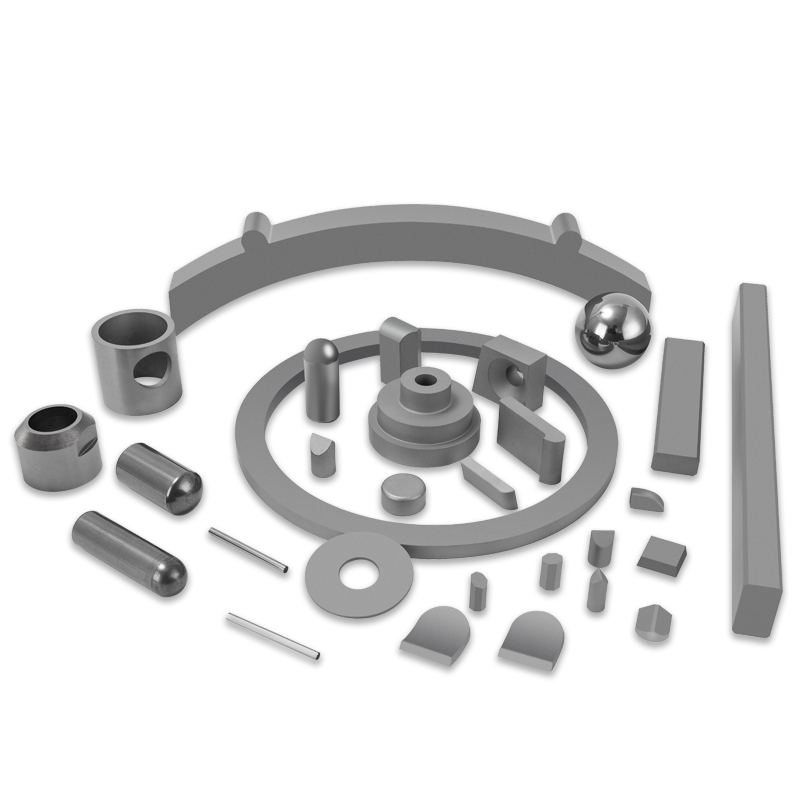
Industry News-In the domain of precision metal stamping, where millions of strokes translate into millions of components, the tooling material dictates not merely the quality of the finished part but the economic viability of the entire production line. Among the pantheon of die materials—tool steels, powder metallurgy alloys, and ceramics—tungsten carbide occupies a singular, exalted position. It is the material of choice for the most punishing applications: high-speed stamping of abrasive sheets, forming of advanced high-strength steels (AHSS), and the production of miniature electronic terminals where dimensional fidelity must be maintained over runs exceeding tens of millions of cycles. The tungsten carbide stamping die is not a generic tool; it is a precision instrument engineered to withstand a confluence of mechanical, thermal, and tribological stresses that would rapidly degrade conventional tool steel. Its deployment requires a deep understanding of its microstructure, its manufacturing constraints, and the operational protocols that unlock its full potential.
Metallurgical Foundation: The Carbide–Cobalt Composite
Tungsten carbide (WC) in the context of stamping dies is rarely a monolithic ceramic. It is a cemented carbide—a metal matrix composite where hard, brittle tungsten carbide particles are bonded by a ductile metallic binder, typically cobalt (Co), with nickel or chromium used for specialized corrosion-resistant grades. The volume fraction of WC typically ranges from 70% to 95%, while the cobalt content, usually between 6% and 15%, determines the toughness-transverse rupture strength trade-off. The WC grains, with a hardness of approximately 2,200 to 2,400 HV, provide the exceptional resistance to abrasive wear and indentation, while the cobalt binder imparts the necessary fracture toughness to absorb the impact loads inherent in stamping operations.
The grain size of the tungsten carbide is a critical design parameter. Submicron and nano-grained grades (WC grain size < 0.8 µm) offer superior hardness and edge retention, making them ideal for blanking and shearing operations where edge sharpness is paramount. Conversely, medium-grained grades (1.0 to 2.0 µm) with higher cobalt content deliver enhanced impact resistance and are favored for forming and drawing dies that experience significant bending stresses. The interplay between grain size and binder content is meticulously tailored to the specific stamping application; a die that excels in punching thin electrical contacts would fail catastrophically in the deep drawing of stainless steel cookware.
Fabrication: Sintering and the Near-Net-Shape Challenge
The production of a tungsten carbide stamping die is an exercise in high-temperature powder metallurgy. The process begins with the controlled mixing of WC powder, cobalt powder, and organic binders (such as paraffin wax or polyethylene glycol) to form a homogeneous slurry, which is then spray-dried into a free-flowing granulate. This granulate is compacted into a green body—either by uniaxial pressing for simple geometries or by cold isostatic pressing (CIP) for larger, more complex shapes. The green body retains the approximate geometry of the final die but possesses no mechanical strength.
The transformative step is liquid-phase sintering, conducted in a vacuum furnace or a hot isostatic press (HIP) at temperatures between 1,380°C and 1,480°C. At this temperature, the cobalt binder melts, and the liquid wets the tungsten carbide particles, promoting densification through capillary action and dissolution-reprecipitation. The result is a fully dense material with porosity typically below 0.1%. However, sintering is also a time of risk: uncontrolled grain growth can coarsen the WC particles, reducing hardness, while uneven temperature distribution can cause distortion or internal stresses. For premium stamping dies, post-sintering HIP treatment is employed to eliminate residual closed pores, enhancing the material's resistance to fatigue crack initiation.
The challenge of achieving a near-net shape is compounded by the minimal shrinkage (approximately 18% to 22% by volume) that must be accurately predicted to produce the final die dimensions. For intricate geometries—such as multi-stage progressive dies with small radii and narrow slots—the green machining must be performed with exceptional precision, as the sintered material is too hard for conventional cutting tools and can only be shaped by electrical discharge machining (EDM) or diamond grinding.
Edge Preparation and Surface Engineering
The performance of a tungsten carbide stamping die is profoundly influenced by the quality of its cutting edges and working surfaces. After sintering, the die undergoes a sequence of abrasive and erosive finishing operations. Diamond grinding wheels, using micron-sized synthetic diamond grit, are employed to achieve the required dimensional tolerances—often within ±2 micrometers for high-precision tooling. The edge radius is a particularly sensitive parameter; an overly sharp edge can lead to chipping, while an excessively rounded edge increases the burr height on the stamped part and accelerates wear. Optimal edge preparation involves a controlled honing process, typically executed with a diamond brush or a magnetic abrasive finishing, to produce a uniform, microscopically chamfered edge that balances sharpness and fracture resistance.
Advanced stamping dies may also receive a surface coating to further extend tool life. Chemical vapor deposition (CVD) and physical vapor deposition (PVD) technologies apply thin films of titanium nitride (TiN), titanium aluminum nitride (TiAlN), or diamond-like carbon (DLC) to the die surfaces. These coatings reduce friction, minimize adhesive wear (galling) when stamping copper alloys or aluminum, and provide a thermal barrier that protects the carbide substrate from the transient temperature spikes generated during high-speed shearing. However, coating adhesion must be meticulously verified, as a delamination event can produce debris that scratches the strip and compromises the die's clearance.
Mechanical Behavior Under Stamp Loading
The service conditions of a stamping die impose a complex stress state: compressive at the punch face, tensile along the side walls, and alternating shear at the cutting edge. Tungsten carbide, despite its high compressive strength (exceeding 4,000 MPa), exhibits a relatively low tensile strength (around 1,500 to 2,000 MPa) and a modest fracture toughness (K₁c typically 8 to 14 MPa·m¹/²). This combination makes the material susceptible to brittle fracture in the presence of microcracks or stress raisers. Therefore, the die design must incorporate generous radii in corners, avoid abrupt section changes, and ensure that the clearance between the punch and the die button is optimized—typically 5% to 10% of the material thickness for mild steel, but adjusted downward for harder or thinner materials to minimize the shear band width and reduce impact loads.
Thermal fatigue is another overlooked degradation mechanism. During high-speed stamping, the die can experience surface temperature rises of 100°C to 200°C within milliseconds due to adiabatic heating of the shearing zone. This rapid thermal cycling induces transient tensile stresses on the die surface, which, over millions of cycles, can generate a network of microcracks—a phenomenon known as "heat checking." Tungsten carbide's high thermal conductivity (approximately 80 W/m·K for WC-10Co, roughly twice that of tool steel) helps dissipate heat rapidly, mitigating thermal gradients. Nevertheless, in extreme applications, the die may require active cooling channels or the selection of a grade with optimized thermal shock resistance, achieved through finer grain sizes and lower binder content.
Abrasive Wear and Its Mitigation
The principal failure mode of tungsten carbide stamping dies is not fracture but abrasive wear. In the stamping of galvanized steel, the zinc coating acts as an abrasive medium that progressively erodes the die clearance. In the blanking of glass-fiber-reinforced composites, the fibers impose a microscopic cutting action on the carbide surface. Over time, this wear enlarges the die opening, increasing the burr height and eventually rendering the component out of spec. The wear resistance of tungsten carbide is directly proportional to its hardness; but hardness and toughness are inversely related through the binder content. Thus, selecting the optimal grade involves a detailed wear assessment—generally through pin-on-disc or Taber abrasion tests—to match the wear mechanism (two-body versus three-body, adhesive versus abrasive) to the carbide's microstructural attributes.
For severe abrasive conditions, designers may select a "superfine" grade with hardness exceeding 1,800 HV30 and cobalt content below 8%. These grades, however, are more brittle and require impeccable die alignment and a robust press with minimal runout. Conversely, for thick plates or high-impact forming, a "tough" grade with 12% to 15% cobalt and a coarse grain structure will tolerate misalignment and shock loads, albeit with a shorter service life before regrinding is needed.
Maintenance, Regrinding, and Economic Lifecycle
A defining advantage of tungsten carbide over ceramic or tool steel is its repairability. When the cutting edge wears, the die can be reground using diamond wheels to restore the original clearance and edge geometry. A properly executed regrind can extend the die's total service life by 300% to 500% compared to a single-use tool. However, regrinding introduces thermal damage risk; grinding without adequate coolant can generate temperatures exceeding 800°C, inducing surface tensile stresses and microcracking. The recommended protocol employs a flood of water-based coolant, a soft bond diamond wheel, and a feed rate that keeps the specific grinding energy low. After regrinding, the surface should be mildly etched or inspected by magnetic particle or dye penetrant methods to ensure the absence of grinding burns.
The economic calculus of investing in tungsten carbide dies is compelling for high-volume production. Although the initial cost of a carbide die is typically three to five times that of a tool steel equivalent, the extended die life—often 10 to 20 times longer between regrinds—reduces downtime, lowers the frequency of die changes, and maintains consistent part quality over prolonged runs. For automotive stamped parts, where annual demands may exceed five million pieces, carbide tooling becomes not only cost-effective but operationally indispensable.
Specialized Variants: PCD-Enhanced and Segmented Dies
For the most demanding applications—stamping of electrical steel laminations for motors or highly abrasive silicon steel—tungsten carbide dies may be augmented with polycrystalline diamond (PCD) inserts at the critical shearing edges. PCD offers a hardness of 8,000 to 10,000 HV and a coefficient of friction near 0.1, dramatically reducing wear. This hybrid construction leverages carbide's structural toughness and PCD's extraordinary edge retention, though it imposes stringent alignment requirements and limits the die's repairability.
Alternatively, for large stamping dies (e.g., automotive body panels), a monolithic tungsten carbide tooling is often impractical due to size and cost. Instead, segmented carbide blocks are mechanically clamped or brazed onto a steel backing plate. This modular approach allows localized replacement of worn sections and provides the flexibility to combine different carbide grades within a single die—harder grades at the cutting sections and tougher grades at the bending radii—optimizing the tool's performance across distinct functional zones.
Conclusion: The Indispensable Tool for Precision Industry
The tungsten carbide stamping die stands as a testament to the synergy between materials science and manufacturing engineering. It is not a universal solution; its brittleness demands careful design, precise press alignment, and disciplined maintenance. Yet, in the niche it occupies—high-volume, high-speed, high-abrasion stamping—it has no equal. It enables the production of billions of connectors, terminals, automotive brackets, and electrical laminations with a consistency that steel cannot match. As sheet materials become stronger and more formable, and as production speeds continue to escalate, the role of tungsten carbide will only expand. Its development, from powder blending to final EDM finishing, represents one of the most sophisticated pathways in modern toolmaking—a path that transforms a brittle ceramic into a resilient, durable, and economically essential pillar of the metalforming industry.
Our Products //
Related Products
If you are interested in our products, please consult us
