

 English
 русский
Tungsten Carbide: The Complete Guide to What It Is, How It's Made, and Where It's Used
Industry News-Content
- 1 What Tungsten Carbide Actually Is and Why It's So Remarkable
- 2 How Tungsten Carbide Is Manufactured: From Raw Ore to Finished Grade
- 3 Understanding Tungsten Carbide Grades and What the Numbers Mean
- 4 The Major Industrial Applications of Tungsten Carbide
- 5 Tungsten Carbide Coatings: A Different Way to Get Carbide Performance
- 6 Key Physical and Mechanical Properties of Cemented Tungsten Carbide
- 7 Recycling and Sustainability of Tungsten Carbide
- 8 Common Misconceptions About Tungsten Carbide Worth Clearing Up
What Tungsten Carbide Actually Is and Why It's So Remarkable
Tungsten carbide — often abbreviated as WC or simply referred to as carbide in industrial settings — is a chemical compound formed by combining tungsten and carbon atoms in equal proportions. In its pure compound form, it appears as a fine grey powder, but the material that engineers and manufacturers work with in practice is cemented tungsten carbide: a composite produced by sintering tungsten carbide powder together with a metallic binder, most commonly cobalt, at extremely high temperatures and pressures. This sintering process fuses the hard carbide particles into a dense, solid material that combines properties no single element can deliver on its own — extraordinary hardness, exceptional wear resistance, high compressive strength, good thermal conductivity, and a density approximately twice that of steel.
The numbers behind tungsten carbide's properties are genuinely impressive. Its hardness on the Vickers scale typically falls between 1400 and 1800 HV depending on grade and cobalt content — several times harder than hardened tool steel and approaching the hardness of diamond, which sits at approximately 10000 HV. Its compressive strength can exceed 6000 MPa, making it one of the strongest materials in compression available to engineers. Its melting point of approximately 2870°C means it retains its mechanical properties at temperatures where most other engineering materials have long since softened or failed. These characteristics collectively explain why cemented tungsten carbide has become indispensable across a remarkable range of demanding industrial applications, from metal cutting and mining to medical devices and electronics.
How Tungsten Carbide Is Manufactured: From Raw Ore to Finished Grade
The production of cemented tungsten carbide is a multi-stage process that begins with tungsten ore mining and ends with a precisely engineered composite material whose properties are controlled to tight tolerances. Understanding the manufacturing chain clarifies why tungsten carbide grades vary in their performance characteristics and why the quality of raw materials and processing conditions has such a direct impact on the properties of the finished material.
Tungsten Ore Extraction and Processing
The primary commercial sources of tungsten are the minerals scheelite (calcium tungstate, CaWO₄) and wolframite (iron manganese tungstate). China dominates global tungsten production, accounting for approximately 80% of world output, with significant deposits also found in Russia, Vietnam, Canada, and Bolivia. Mined ore is first concentrated by flotation and gravity separation to increase the tungsten content, then chemically processed to produce ammonium paratungstate (APT) — the most common intermediate form in the tungsten supply chain. APT is subsequently reduced under hydrogen atmosphere at high temperature to produce tungsten metal powder, which is then carburized by reaction with carbon in a high-temperature furnace to produce tungsten carbide powder. The particle size of this WC powder — which can range from sub-micron to tens of microns — is a critical parameter that directly determines the grain size and hardness of the finished cemented carbide.
Mixing, Milling, and Binder Addition
Tungsten carbide powder is blended with cobalt powder — the most common binder, typically at concentrations between 3% and 25% by weight depending on the target grade — along with any other additives such as grain growth inhibitors (commonly vanadium carbide or chromium carbide at sub-percent additions) and pressing lubricants. This blend is then wet-milled in a ball mill for an extended period — typically 24–72 hours — to achieve intimate mixing, break down any agglomerates, and reach the target particle size distribution. The milled slurry is spray-dried to produce a free-flowing granulated powder with consistent particle size and density suitable for pressing. The uniformity of mixing at this stage is critical: any variation in binder distribution across the powder will produce local property variations in the sintered part that compromise both mechanical performance and reliability.
Pressing and Shaping
The spray-dried powder is compacted into the desired near-net shape using one of several pressing methods. Uniaxial die pressing is used for simple shapes such as cutting inserts, rods, and wear parts in high-volume production. Isostatic pressing — where pressure is applied uniformly from all directions through a fluid medium — is used for more complex shapes and produces more uniform green density, which translates into more consistent sintered properties. Extrusion is used to produce long rods and tubes. Cold pressing produces a "green" compact that has sufficient strength for handling but must still be sintered to develop its final properties. Some complex shapes are produced by injection molding the carbide-binder-polymer mixture (metal injection molding or MIM process) before debinding and sintering.
Sintering
Sintering is the critical step that transforms the pressed green compact into fully dense cemented tungsten carbide. The compact is heated in a controlled atmosphere furnace — typically hydrogen or vacuum — through a carefully programmed temperature cycle that first burns off the pressing lubricant, then reaches the sintering temperature, which is above the melting point of the cobalt binder (approximately 1320°C) but well below the melting point of tungsten carbide. At sintering temperature, the liquid cobalt phase wets the tungsten carbide particles and draws them together by capillary action, filling pores and producing a dense, cohesive structure as the part cools and the cobalt solidifies. The finished sintered part is typically 20–25% smaller in linear dimensions than the green compact — a predictable and precisely controlled shrinkage that is accounted for in the tooling design. Hot isostatic pressing (HIP) is often applied after sintering to eliminate any residual microporosity, further improving density, toughness, and fatigue resistance in premium grades.
Grinding and Finishing
Sintered tungsten carbide is too hard to be machined by conventional cutting tools — it must be ground using diamond abrasive wheels to achieve the tight dimensional tolerances and surface finish quality required for cutting tools, wear parts, and precision components. Diamond grinding of cemented carbide is a skilled and capital-intensive operation, and the grinding process parameters — wheel specification, grinding fluid, feed rates, and dressing frequency — significantly affect both the dimensional accuracy and the subsurface condition of the finished part. Improper grinding can introduce residual tensile stresses or microcracking that reduces the toughness and fatigue life of cutting edges. For cutting tool applications, the ground edges are often further processed by edge preparation — a controlled honing or brushing operation that produces a defined edge radius that improves tool life by reducing chipping at the cutting edge under the impact and thermal cycling of machining operations.
Understanding Tungsten Carbide Grades and What the Numbers Mean
Commercial cemented tungsten carbide is not a single material but a family of grades whose properties are systematically varied by adjusting the cobalt content, carbide grain size, and the addition of other carbide phases such as titanium carbide (TiC), tantalum carbide (TaC), and niobium carbide (NbC). Understanding the grade system helps engineers and purchasing professionals select the most appropriate grade for their specific application rather than defaulting to a general-purpose choice that may be suboptimal.
| Grade Characteristic | Low Cobalt (3–6% Co) | Medium Cobalt (8–12% Co) | High Cobalt (15–25% Co) |
| Hardness | Very high (1700–1800 HV) | High (1400–1600 HV) | Moderate (1000–1300 HV) |
| Wear resistance | Excellent | Good | Moderate |
| Toughness / impact resistance | Lower | Good | High |
| Transverse rupture strength | Moderate | High | Very high |
| Density (g/cm³) | ~15.0–15.3 | ~14.3–14.9 | ~13.0–14.0 |
| Typical applications | Precision wear parts, wire drawing dies, seal rings | Metal cutting inserts, end mills, drills | Mining picks, road milling tools, rock drilling bits |
Grain size is an equally important variable that interacts with cobalt content to determine the property balance of a grade. Fine-grain grades (WC grain size below 1 micron, classified as submicron or ultrafine) achieve significantly higher hardness and wear resistance at a given cobalt content compared to coarser grain grades, while medium grain grades (1–3 microns) offer a balanced hardness-toughness combination, and coarse grain grades (above 3 microns) maximize toughness at some cost to hardness. The ISO designation system for cemented carbide cutting grades — P, M, K, N, S, H — categorizes grades by the workpiece material type they are designed to cut, providing a practical starting point for cutting tool grade selection even without detailed knowledge of the underlying metallurgy.
The Major Industrial Applications of Tungsten Carbide
Cemented tungsten carbide is used across an extraordinarily diverse range of industries and applications. The common thread running through all of them is the need for a material that combines hardness, wear resistance, and sufficient toughness to survive in demanding operating environments where conventional materials fail prematurely. The following sectors represent the most significant applications by volume and technical importance.
Metal Cutting and Machining
Metal cutting — the manufacture of precision components by removing material from metal workpieces using cutting tools — is the largest single application for cemented tungsten carbide by value. Carbide indexable cutting inserts, solid carbide end mills, carbide drills, and carbide boring bars have largely displaced high-speed steel cutting tools in modern CNC machining centers because they can operate at cutting speeds three to ten times higher than HSS while maintaining sharp cutting edges for far longer. This translates directly into higher machine productivity, lower cost per part, and better surface finish and dimensional consistency in machined components. The inserts used in turning, milling, and drilling operations are typically coated with one or more layers of hard ceramic coatings — titanium nitride (TiN), titanium carbonitride (TiCN), aluminum oxide (Al₂O₃), and aluminum titanium nitride (AlTiN) being the most common — applied by physical vapor deposition (PVD) or chemical vapor deposition (CVD) processes. These coatings add an additional wear-resistant layer that further extends tool life and allows even higher cutting speeds, particularly in dry or near-dry machining where cutting fluid use is minimized for environmental and cost reasons.
Mining, Drilling, and Rock Excavation
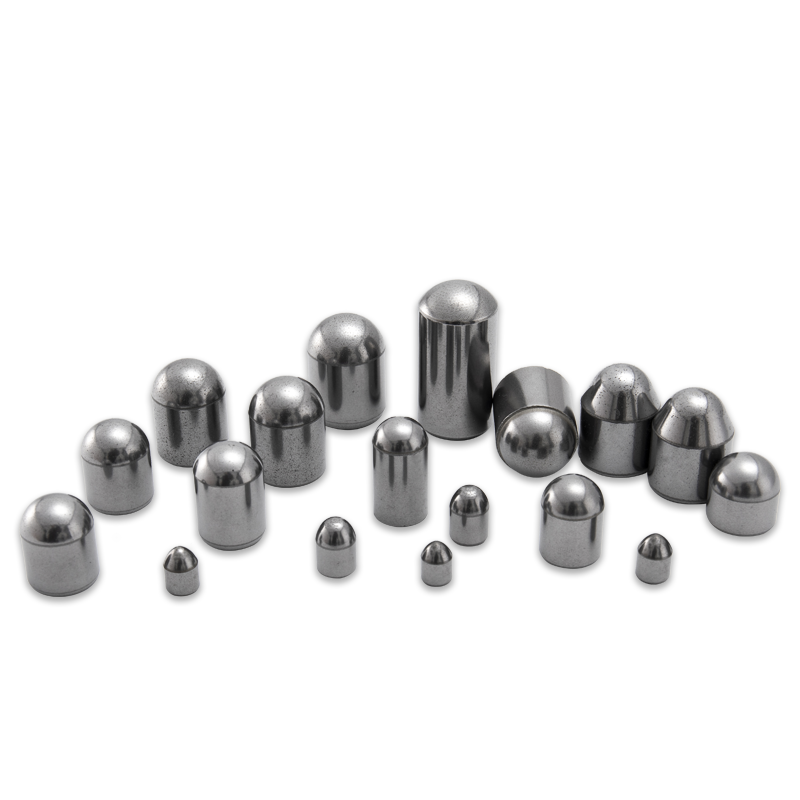
Mining and construction drilling represent the second largest application category for tungsten carbide, consuming enormous volumes of high-cobalt, toughness-optimized grades in the form of drill bits, rotary cutter inserts, raise boring heads, and tunnel boring machine (TBM) disc cutters. Tricone roller cone drill bits for oil and gas drilling use hundreds of carbide inserts per bit to cut through rock formations at depths of thousands of meters. Percussive drill bits for surface and underground mining use carbide buttons that must withstand the repeated high-energy impacts of pneumatic or hydraulic drilling equipment in abrasive rock. Longwall mining shearer picks and continuous miner drum picks use carbide-tipped tools to cut coal and soft rock in underground coal mines. In each of these applications, the carbide grade must be carefully optimized to provide maximum resistance to the specific combination of abrasion and impact encountered in the target rock type, since a grade that is too hard will fracture under impact while one that is too soft will wear rapidly in abrasive conditions.
Wire Drawing and Metal Forming Dies
Tungsten carbide dies are the standard material for wire drawing — the process of reducing the diameter of metal wire by pulling it through a series of progressively smaller die apertures. The combination of extreme hardness, wear resistance, and compressive strength that carbide provides allows wire drawing dies to maintain their precise aperture geometry through the processing of enormous lengths of wire — potentially hundreds of thousands of meters per die before replacement — while withstanding the very high contact pressures generated at the die surface. Carbide dies are used for drawing steel, copper, aluminum, and specialty alloy wire across a diameter range from several millimeters down to fine wire below 0.1mm. Beyond wire drawing, carbide is used extensively in cold forming dies, deep drawing punches, thread rolling dies, and extrusion tooling, wherever the combination of wear resistance and compressive strength under cyclic loading is required to maintain dimensional accuracy and surface quality over high production volumes.
Wear Parts and Structural Components
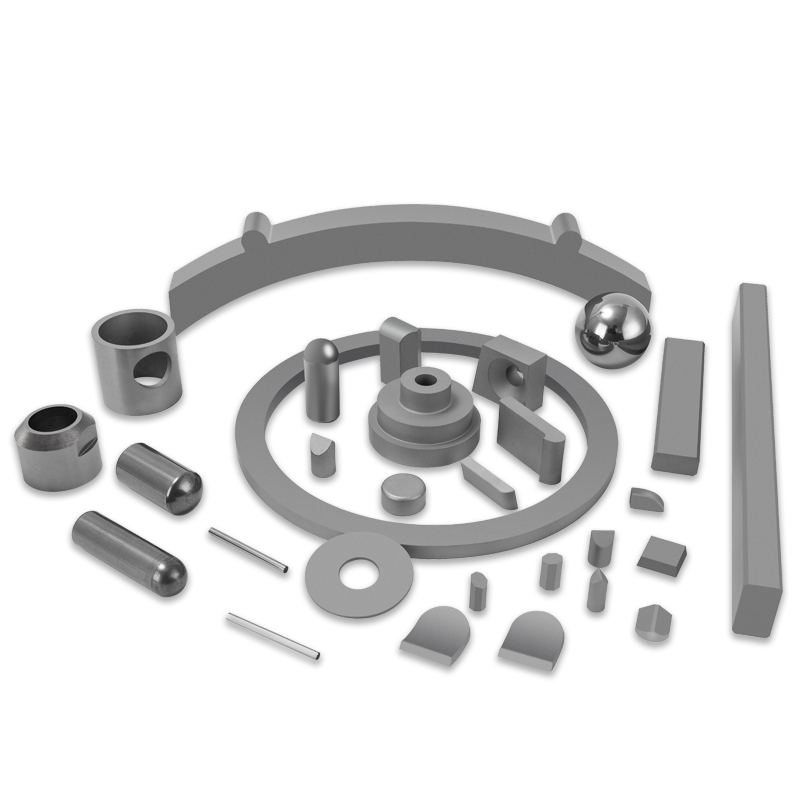
The wear part and structural component application of tungsten carbide encompasses a very broad range of products used across industries as diverse as paper and printing, food processing, electronics manufacturing, textile machinery, and pumping systems. Carbide nozzles for abrasive blasting and spray systems withstand the erosive action of abrasive particles far longer than steel alternatives. Carbide sealing faces for mechanical seals in pumps handling abrasive slurries maintain their surface finish and flatness through millions of operating cycles. Carbide guide rolls and forming rolls in wire and tube production lines maintain dimensional accuracy over extended production runs. Carbide valve seats and balls in flow control valves handling abrasive or erosive process fluids deliver service life that is orders of magnitude longer than conventional metal alternatives. In each case, the common driver for specifying carbide is the elimination of premature wear failure that would otherwise require frequent replacement, machine downtime, and associated production losses.
Medical and Dental Instruments
Cemented tungsten carbide is used in medical and dental applications where its hardness, biocompatibility, corrosion resistance, and ability to hold a sharp cutting edge through repeated sterilization cycles make it superior to stainless steel. Surgical scissors, needle holders, and dissecting forceps manufactured with carbide inserts at their working surfaces maintain sharper, more precise cutting performance through far more sterilization and use cycles than all-steel equivalents. Dental burs for cutting tooth enamel and bone during procedures are almost exclusively made from carbide due to its superior cutting efficiency and longevity compared to steel. Orthopedic cutting instruments including reamers, rasps, and bone saws use carbide for improved cutting performance and extended service life. The stringent cleanliness and biocompatibility requirements of medical applications mean that only specific high-purity carbide grades with controlled trace element levels are qualified for these uses.
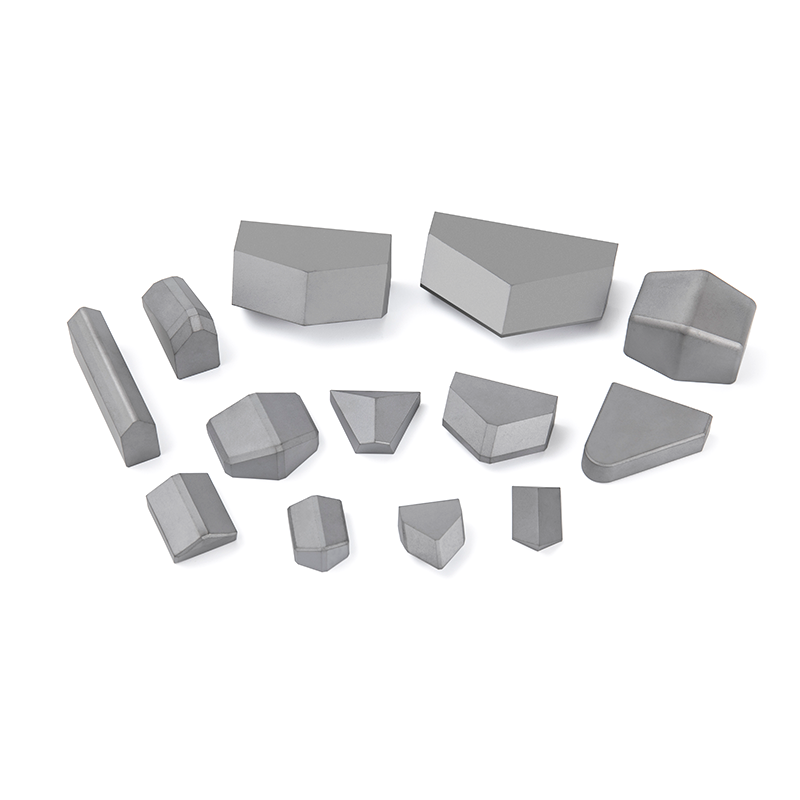
Tungsten Carbide Coatings: A Different Way to Get Carbide Performance
Beyond solid cemented carbide components, tungsten carbide is widely applied as a surface coating onto steel and other substrate materials using thermal spray processes, most commonly high-velocity oxygen fuel (HVOF) spraying and plasma spraying. In tungsten carbide coating applications, the goal is to combine the wear resistance and hardness of carbide at the working surface with the toughness, machinability, and lower cost of a steel substrate, achieving a performance balance that neither material could deliver alone.
HVOF-sprayed tungsten carbide-cobalt (WC-Co) and tungsten carbide-cobalt-chromium (WC-CoCr) coatings are the most widely used thermal spray coatings for wear and erosion protection globally. The HVOF process accelerates carbide-binder powder particles to very high velocities before impact with the substrate, producing dense, well-bonded coatings with hardness approaching that of sintered carbide and very low porosity. These coatings are used on aircraft landing gear components to replace hard chrome plating for corrosion and wear protection, on pump shafts and sleeves in abrasive slurry service, on paper machine rolls subject to abrasive wear from recycled fiber content, on hydraulic cylinder rods, and on many other components where a hard, wear-resistant surface extending the life of a larger steel structure is the most cost-effective engineering solution. The coating thickness typically ranges from 100 to 400 microns, and the coated surface can be ground to precise dimensional tolerances and surface finish after spraying.
Key Physical and Mechanical Properties of Cemented Tungsten Carbide
For engineers specifying tungsten carbide for a new application or comparing it with alternative materials, having a clear picture of its physical and mechanical property range is essential. The following table summarizes the most important properties across the typical grade range for cemented WC-Co carbide.
| Property | Typical Range (WC-Co grades) | Comparison to Steel |
| Vickers Hardness (HV) | 1000 – 1800 HV | 3–7× harder than hardened tool steel |
| Density (g/cm³) | 13.0 – 15.5 | ~1.7–2× denser than steel |
| Young's Modulus (GPa) | 500 – 700 GPa | ~2.5–3.5× stiffer than steel |
| Compressive Strength (MPa) | 3500 – 7000 MPa | Much higher in compression than steel |
| Transverse Rupture Strength (MPa) | 1500 – 4000 MPa | Comparable to or better than hardened steel |
| Fracture Toughness (MPa·m½) | 8 – 22 MPa·m½ | Lower than steel; brittle in tension |
| Thermal Conductivity (W/m·K) | 70 – 110 W/m·K | Higher than most steels |
| Thermal Expansion Coefficient (×10⁻⁶/°C) | 4.5 – 6.5 | ~half that of steel; consider in bonded assemblies |
| Melting Point (°C) | ~2870°C (WC compound) | Far higher than steel (~1400°C) |
Recycling and Sustainability of Tungsten Carbide
Tungsten is classified as a critical raw material by both the European Union and the United States due to supply concentration risks — with China controlling the vast majority of global primary production — and its essential role in strategic industries. This supply risk, combined with the high economic value of tungsten, makes recycling of tungsten carbide scrap an important component of the global tungsten supply chain. Approximately 30–40% of tungsten consumed globally is currently sourced from recycled carbide scrap, a proportion that the industry is actively working to increase through improved collection and processing infrastructure.
Several established recycling routes exist for spent tungsten carbide. The zinc reclaim process dissolves the cobalt binder by reaction with molten zinc at approximately 900°C, leaving the tungsten carbide grains intact for reuse after zinc removal by vacuum distillation. This process is preferred when the recovered WC powder will be reused in carbide production because it preserves grain size and avoids the energy-intensive chemical processing needed to convert tungsten back to its elemental form. The cold stream process uses high-velocity impact to mechanically fracture spent carbide into fine powder that is blended with virgin powder for recycling. Chemical conversion processes — including the APT route — dissolve the entire carbide compact and chemically purify the tungsten through ammonium paratungstate, producing material equivalent to primary tungsten that can be carburized to new WC powder. The economic value of tungsten carbide scrap makes it one of the most actively recycled industrial materials, with established collection and processing networks operating globally across the cutting tool, mining tool, and wear part industries.
Common Misconceptions About Tungsten Carbide Worth Clearing Up
Several persistent misconceptions about tungsten carbide circulate in both technical and consumer contexts, and addressing them directly helps set realistic expectations about what the material can and cannot do.
- "Tungsten carbide is unbreakable": This is one of the most common misunderstandings, particularly in the context of tungsten carbide jewelry and consumer products. Cemented carbide is extremely hard and wear-resistant, but it is also brittle in tension — it has a relatively low fracture toughness compared to steel and will crack or shatter if subjected to sufficient impact or tensile stress. A tungsten carbide ring, for example, cannot be bent to remove it in an emergency the way a gold ring can — it must be cracked off using a specific technique. The hardness that makes carbide so effective for wear applications is inseparable from the brittleness that makes it vulnerable to impact fracture.
- "All tungsten carbide is the same": The phrase "tungsten carbide" covers a family of grades with significantly different properties depending on cobalt content, grain size, and additional carbide phases. A mining pick grade with 20% cobalt has very different hardness, wear resistance, and toughness characteristics from a precision wear part grade with 6% cobalt and submicron grain size. Specifying "tungsten carbide" without a grade designation provides insufficient information for most engineering applications.
- "Tungsten carbide cannot be scratched": While cemented carbide is extremely scratch-resistant compared to metals, it can be scratched by materials harder than itself — most notably diamond, cubic boron nitride (CBN), and some ceramic materials. Diamond-coated abrasives and CBN grinding wheels are routinely used to grind and finish tungsten carbide parts precisely because they are harder and can remove material from the carbide surface.
- "Higher cobalt always means lower quality": This is incorrect in the context of applications requiring toughness and impact resistance. High-cobalt grades are specifically engineered for applications like mining picks and heavy interrupted cutting where impact resistance is the primary requirement. In these applications, a low-cobalt grade selected on the basis of maximum hardness would fracture rapidly. The right cobalt level is the one that provides the optimal balance of hardness and toughness for the specific application — neither universally high nor universally low.
- "Tungsten carbide tools never need to be replaced": Tungsten carbide tools wear far more slowly than steel alternatives in most applications, but they do wear and eventually require replacement or reconditioning. The economics of carbide tools are based on their superior wear life — which reduces the frequency and cost of replacement compared to less wear-resistant alternatives — not on infinite service life. Regular inspection and proactive replacement at the appropriate wear limit is always better than running carbide tools to complete failure, which typically causes additional damage to associated components.
Our Products //
Related Products
If you are interested in our products, please consult us
