

 English
 русский
Tungsten Carbide Blade Guide: Grades, Types, and How to Choose the Right One
Industry News-Ask five people what a tungsten carbide blade is and you will probably get five different answers. In a machine shop, the phrase usually points to an indexable insert clamped into a turning or milling holder. In a film converting plant, it describes a thin slitter blade running against laminated film at several hundred metres per minute. Underground, it can mean a button insert pressed into a rock drill bit, a pick on a shearer drum, or a cutter insert on a tunnel boring machine cutterhead. The shapes and sizes differ enormously, but the material family behind them is the same: cemented tungsten carbide, a powder-metallurgy composite of hard tungsten carbide grains held together by a cobalt binder.
We are Gaite, a carbide manufacturer based in Changzhou, Jiangsu, and we have been pressing, sintering, and grinding tungsten carbide since 1990. Across those decades, the questions customers bring us have barely changed. Which grade? Which geometry? And how do we make the edge last longer than it did last time? This article sets out what we have learned on the shop floor, and where the practical decisions really sit.
Content
What Makes Tungsten Carbide Different from Steel
A carbide blade keeps its shape because the material resists both abrasion and deformation. Hardness typically falls between 1400 and 1700 HV, against roughly 600 to 900 HV for hardened tool steel. More importantly, that hardness survives heat. At 800 to 1000 degrees Celsius, a carbide edge is still cutting while a high-speed steel edge has already softened and lost its geometry. Cemented carbide also carries high compressive strength and stiffness, with a Young's modulus in the region of 550 to 650 GPa, which is exactly what a cutting edge needs when it must not flex away from the workpiece under load.
Hardness and hot hardness
Hardness is governed by two things: how much cobalt sits between the carbide grains, and how fine those grains are. A 6 percent cobalt, submicron grade can reach the top of the hardness range and hold a keen edge, which is why it suits finishing operations and thin slitting blades. A 10 to 12 percent cobalt grade with coarse grains is softer on paper but far more resistant to cracking under impact, which is what a rock drilling insert or a milling pick actually needs. Neither grade is better in absolute terms; they answer different questions.
The toughness trade-off
Nothing comes free. Carbide does not bend before it breaks, it chips. Transverse rupture strength generally sits between 2000 and 3500 MPa, and the number moves in the opposite direction to hardness when you change cobalt content or grain size. Thermal cycling is the second pressure. Interrupted cuts, milling, and wet cutting all drive rapid heating and cooling cycles into the edge, and carbide responds to that by developing thermal cracks long before it wears out. Understanding which of these mechanisms is limiting tool life is the first step in specifying a blade properly.
The Main Blade Families and Where They Work
The word "blade" covers a wide spread of parts, and the carbide that suits a slitter blade is rarely the carbide that survives a tunnel face. The table below maps the common families to the conditions they meet in service. For a longer, product-specific walkthrough, our guide to tungsten carbide cutting blade types and uses goes into more detail on geometry and edge preparation.
| Blade family | Typical working condition | Carbide characteristics that matter |
|---|---|---|
| Indexable cutting blade or insert | Turning, milling, grooving and parting of steel, cast iron or non-ferrous workpieces | 6 to 12 percent cobalt, fine to medium grain, coating and edge hone matched to the operation |
| Thin slitter and trimming blade | Continuous slitting of film, foil, paper and laminated converting stock | Submicron grain, high hardness, straightness in the micrometre range, minimal burr |
| Tunnel boring machine insert | Rolling and scraping contact with rock on a cutterhead under high thrust | Medium to coarse grain with elevated cobalt, resistance to thermal fatigue and spalling |
| Road milling tool and pick | Milling of asphalt or concrete pavement with repeated shock loading | Coarse grain, 8 to 12 percent cobalt, good hot wear resistance and body retention |
| Rock drilling button and insert | Down-the-hole hammer or rotary drilling into hard abrasive formations | Coarse grain with high impact strength and resistance to grain pull-out |
| Round shank pick | Cutting of coal and soft rock on shearer or roadheader drums | Balanced hardness and toughness, reliable brazed joint to the steel shank |
| Stamping die insert | Blanking, forming, drawing and cold heading of sheet metal at high volume | High compressive strength, medium to coarse grain, resistance to chipping and galling |
One pattern runs through the table. As impact severity rises, cobalt content rises and the grain structure coarsens; as surface finish and dimensional precision become the priority, the material moves the other way. Choosing the wrong direction is the single most common reason a blade fails early.
How to Read a Carbide Grade Before You Order
Grade designations differ from supplier to supplier, which makes catalogue numbers difficult to compare directly. Four variables explain most of the performance difference, and all four should be on the table before a purchase decision is made.
- Cobalt content. The binder phase. Six percent cobalt delivers maximum wear resistance; ten to twelve percent trades some of that wear resistance for impact strength and crack resistance.
- Grain size. Submicron grades below 0.8 micrometres give the highest hardness and the keenest edge. Coarse grades of 3 to 6 micrometres absorb shock and resist spalling in rock and pavement work.
- Coating. CVD and PVD coatings reduce friction and limit heat transfer into the insert during steel and cast iron machining. Uncoated polished grades are often the better answer for aluminium, plastics and wood-based materials.
- Edge preparation. A razor-sharp edge suits finishing and soft workpieces. A honed or T-landed edge resists micro-chipping in roughing and interrupted cutting, where a sharp edge would simply break away.
Add the joining method to that list. Whether a blade is brazed, shrink-fitted, or mechanically clamped changes the stresses it sees at the interface, and brazing practice deserves as much attention as the grade itself.
Where Blades Fail First
When a blade comes back worn out, the useful question is not how long it lasted but how it died. Most failures we are asked to analyse fall into a small number of categories.
- Edge chipping. Usually a sign of insufficient toughness, excessive feed, or a toolholder with too much runout.
- Flank wear. The normal, gradual wear mechanism. If it accelerates suddenly, cutting speed or workpiece hardness has moved outside the grade's comfort zone.
- Crater wear. Chemical interaction between the chip and the rake face at high temperature, most common when machining steel at high speed.
- Thermal cracking. Comb cracks driven by interrupted cutting with coolant applied, or by unstable cutting conditions.
- Brazing failure. Cracks originating at the joint, often from uneven heating, excessive filler metal, or grinding stress after joining.
- Binder leaching. Cobalt removal by aggressive coolants or corrosive media, which leaves a weak, porous surface layer.
Each cause points to a different fix: a tougher grade, a modified edge preparation, a coated variant, or simply a change in machining parameters. Replacing the blade without diagnosing the mechanism usually produces the same failure again.
From Powder to a Finished Edge
At our plant in Changzhou, a blade starts as tungsten carbide powder blended with cobalt and pressed on TPA presses into a shape close to final form. Low-pressure sintering then densifies the part, and the skill lies in holding both hardness and porosity within tight limits across the whole batch. Grinding and edge preparation follow, using equipment imported from Germany and five-axis tool grinders from Australasia, together with a digital tool presetter from Sweden and experienced technical staff who know how to use it. The full manufacturing process of tungsten carbide cutting blades is described in detail elsewhere on this site.
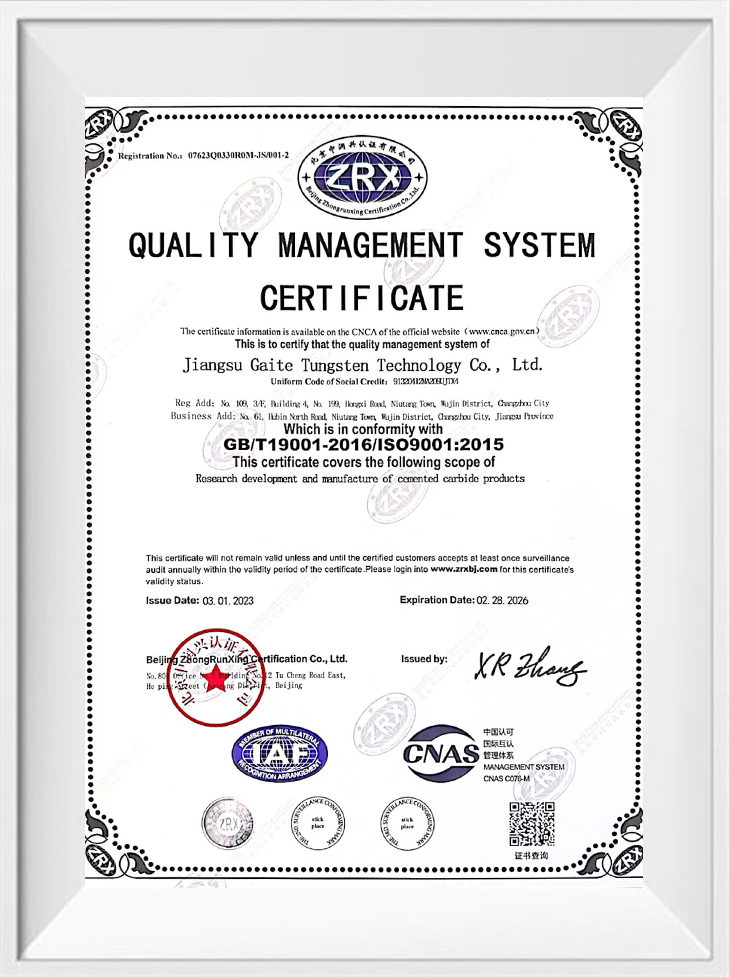
Quality control runs through the same chain. We work to ISO 9001 and ISO 14001 systems, and our high-precision drills, reamers and finishing tools are produced to a German standard production system so that they can substitute for imported tooling without re-qualifying a process. For customers in engine and general machinery production, that substitution is often the point of the whole exercise: the same hole quality and the same batch consistency, at a lower cost per part.
Application Notes from the Shop Floor
Metal cutting
For turning and milling, the conversation usually starts with workpiece material and machine rigidity rather than with the blade itself. A rigid machine with a stable setup will reward a harder, sharper blade; a lighter machine will punish it. Matching the grade to the machine, not only to the workpiece, is where most of the gain sits.
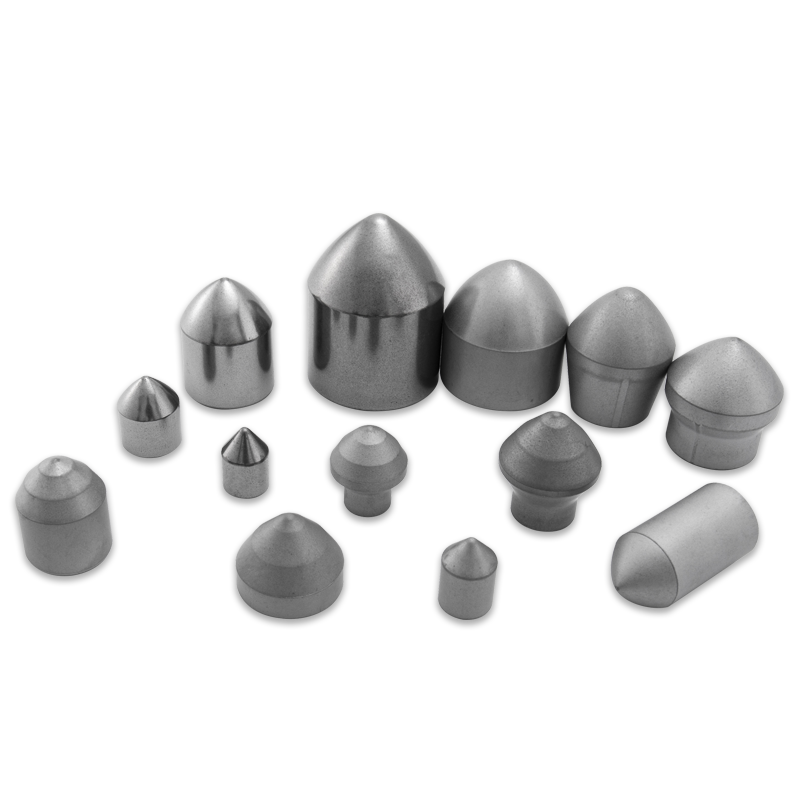
 Tungsten Carbide Cutting BladeTungsten carbide cutting tools obtain the required dimensional accuracy and surface quality by removing the excess materials of the machined parts.View Product →
Rock drilling and tunnelling
In drilling and tunnelling work, the enemy is shock. Coarse-grain, higher-cobalt grades with a well-supported insert seat survive the impact loading that destroys harder materials. Attention to brazing, insert protrusion and hole fit is as important as the grade specification.
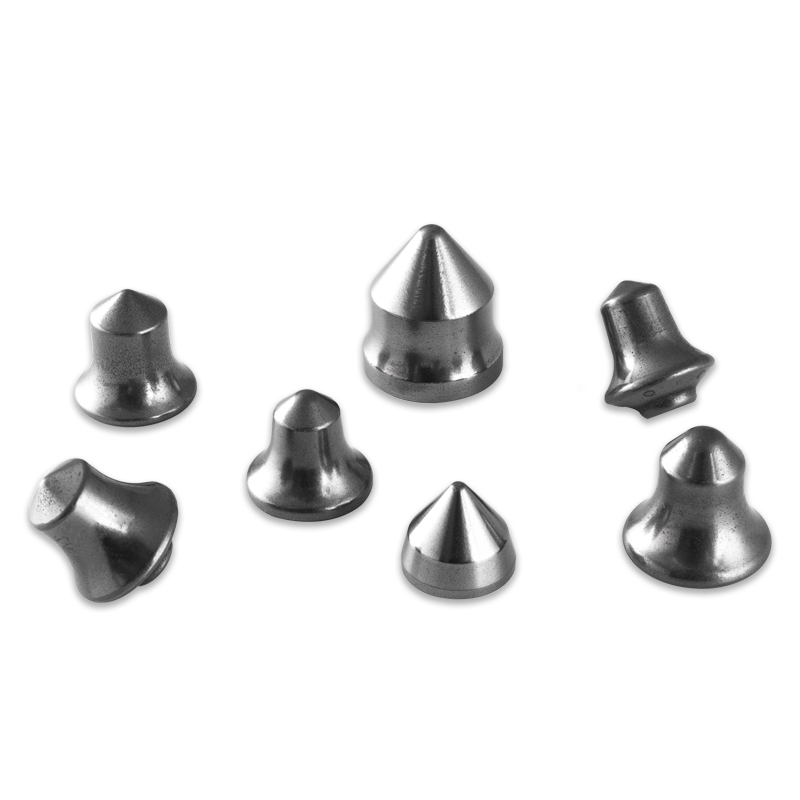
Tungsten Carbide Rock Drilling ToolsAs a traditional mining drilling tool,tungsten carbide rock drilling tools are subject to complex effects such as impact and wear, and the working conditions are harsh...View Product →
Stamping and forming
In dies, the blade is asked to hold a dimension over hundreds of thousands of strokes while absorbing side loads. High compressive strength and chipping resistance matter more than peak hardness, and a properly supported insert will outlast a harder but unsupported one by a wide margin.
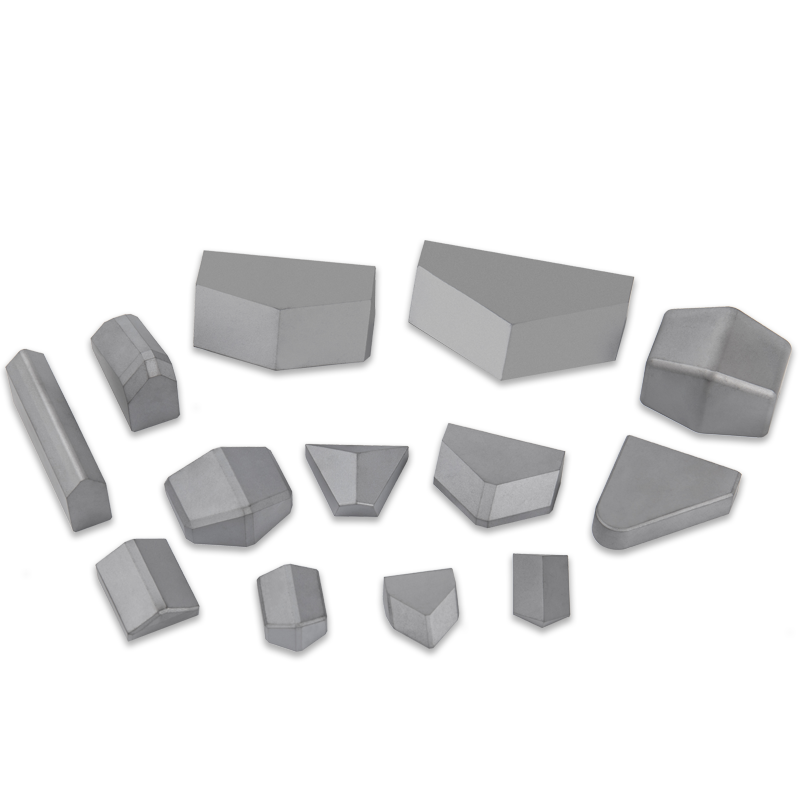
Tungsten Carbide Stamping DieIn the manufacturing process, the die needs to withstand large friction and wear. Compared with other materials,Our tungsten carbide dies have longer service life, bet...View Product →
Our own range covers cutting blades, tunnel boring machine inserts, road milling tools, rock drilling tools, round shank picks for coal mining, and stamping dies, and we design custom tooling where a standard part does not fit the application.
A Practical Checklist Before You Specify a Blade
- What material is being cut, and at what hardness or abrasiveness?
- Is the cut continuous or interrupted, and how severe is the shock loading?
- How is the blade held: clamped, brazed, shrink-fitted, or pressed into a seat?
- What condition is the machine in, including spindle runout, rigidity and coolant delivery?
- Which failure mode ended the life of the previous blade?
- Can the blade be re-ground, and how many regrinds are realistic before replacement?
Answer those six questions honestly and the grade, geometry and edge preparation usually select themselves. Where they do not, we would rather spend twenty minutes discussing the application than ship a part that fails three weeks later and costs the customer a production shift.
A tungsten carbide blade is a small component with an outsized effect on cost per part, whether it is trimming film at high speed or holding a tunnel boring machine on line. The material rewards care: the right grade for the load, a geometry matched to the operation, and a joining method that does not undo the work of the sintering furnace. That has been our focus since 1990, and it is the reason we keep asking customers how the blade failed, not just how fast they want the next shipment.
Our Products //
Related Products
If you are interested in our products, please consult us
